

A sewer backup after heavy rain in Oklahoma City usually happens because rainfall adds water to the ground and sewer network faster than a restricted private sewer lateral or the surrounding wastewater system can comfortably carry it.
Groundwater may enter through pipe cracks or separated joints, an existing partial blockage may reduce available capacity, or higher flow in the public sewer main may influence drainage from the property.
We provide plumbing service throughout Oklahoma City, and years of working with local drain and sewer systems have shown us that the timing of a backup during or shortly after a storm often provides some of the most useful clues about where the extra water is coming from.
The important point is that heavy rain does not automatically mean your sewer pipe needs replacement. Rain often acts as the event that reveals a condition that is much harder to notice during normal dry weather.
Understanding that difference can help you determine whether you are looking at a household drainage restriction, groundwater entering a private sewer lateral, a condition in the public sewer system, or a combination of factors.
The Short Answer: Why Can Rain Affect a Sanitary Sewer?
Your sanitary sewer is designed primarily to carry wastewater from toilets, showers, sinks, washing machines, and other plumbing fixtures toward the public wastewater system.
Rainwater belongs primarily in the stormwater system and on properly designed surface drainage paths.
However, rain can still influence a sanitary sewer.
The Environmental Protection Agency uses the term rainfall derived infiltration and inflow for additional water that reaches a sanitary sewer during or after rainfall. Infiltration generally refers to groundwater entering through openings such as cracked pipes and leaking joints.
Inflow generally refers to water entering more directly through drainage connections and similar pathways. EPA identifies this added wet weather flow as an important cause of sanitary sewer overflows and backups into buildings.
This explains why a plumbing system can appear completely normal through several dry weeks and then respond differently during a strong Oklahoma City rain event.
What Happens Underground During Heavy Rain?
Think of your sewer lateral as a pathway with a limited amount of usable capacity.
During normal conditions, household wastewater moves through the lateral and enters the municipal sewer main.
Now imagine that the surrounding soil becomes saturated.
If the private lateral has an open joint, small crack, damaged connection, or another pathway for groundwater, additional water can enter the pipe. At the same time, the public sewer network may also be receiving increased wet weather flow from many properties throughout the area.
A sewer line that had plenty of available capacity during dry weather can therefore experience very different hydraulic conditions during a storm.
If there is also a partial restriction inside the private line, the amount of usable space becomes even smaller.
Wastewater then moves more slowly, water levels can rise inside the drainage system, and the first visible response often occurs at the lowest plumbing opening in the house.
That is why basement floor drains, low showers, tubs, and lower level toilets are commonly associated with rain related sewer backup symptoms.
Heavy Rain Often Reveals an Existing Partial Main Sewer Line Restriction
One of the most useful distinctions homeowners can make is whether the drainage system also shows symptoms when the weather is dry.
A partially restricted main sewer line may continue moving normal household wastewater for a considerable period.
The line still has capacity.
It simply has less capacity than a fully open pipe.
Heavy rain can change the balance by adding groundwater or increasing downstream flow conditions. Suddenly, the remaining space inside the system is no longer as generous.
This is why some homeowners first notice a sewer problem during a thunderstorm even though the underlying restriction may have been developing gradually.
Common contributors to reduced sewer capacity include accumulated material inside the line, tree roots, pipe scale, displaced joints, low sections of pipe, and structural changes that catch solids as wastewater moves toward the main.
If multiple fixtures have also been draining slowly during dry weather, a restriction within the private drainage system becomes a stronger possibility.
Groundwater Can Enter Cracked Sewer Pipes and Separated Joints
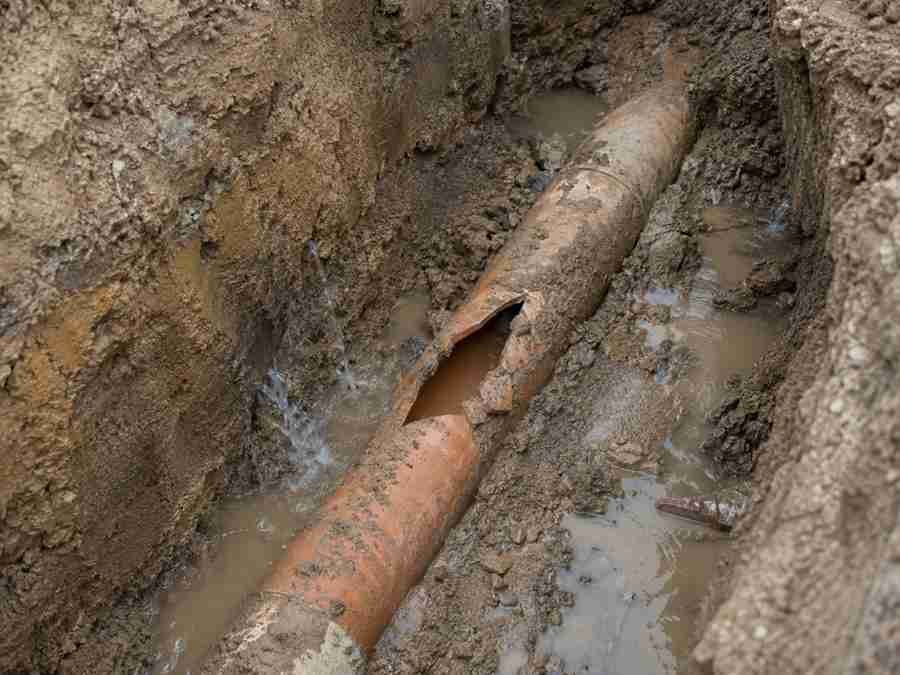
This is one of the most important mechanisms to understand.
When rain soaks into the soil around a buried sewer pipe, the water does not simply disappear.
Some becomes runoff. Some remains in the soil. Some moves deeper through the ground.
If the sewer lateral is well sealed, that groundwater generally stays outside the pipe.
If the pipe contains cracks, open joints, deteriorated connections, or similar openings, groundwater has a pathway into the sewer.
EPA describes this process as infiltration.
The amount of additional water entering one small defect might not sound significant, but a sewer network contains many feet of pipe, joints, service connections, manholes, and laterals. Across an entire drainage area, the accumulated wet weather flow can become meaningful.
For an individual homeowner, the practical clue is often timing.
A backup that develops during rain or shortly after prolonged rainfall may deserve a different diagnostic approach than a drain that backs up every time a washing machine empties on a sunny afternoon.
Oklahoma City’s Soil Conditions Can Make Pipe Condition More Important
Local ground conditions matter because your sewer lateral does not exist in isolation. It is buried in soil that gains and loses moisture throughout the year.
Oklahoma City plumbers routinely work with underground lines affected by soil movement, pipe settlement, older joints, roots, and changing moisture conditions.
After years of providing plumbing service in the Oklahoma City area, one pattern becomes especially useful to recognize: a pipe does not have to be completely blocked to behave differently when the surrounding ground becomes saturated.
A joint that has shifted slightly can create both an entry point for groundwater and an irregular interior surface where debris collects.
A low section of sewer pipe can retain water and solids.
A crack may allow moisture and roots to interact with the pipe.
Heavy rainfall adds another variable to each of these existing conditions.
That is why understanding the condition of the lateral is usually more useful than assuming that rain itself is the entire explanation.
Tree Roots Can Reduce Available Sewer Capacity
Tree roots naturally seek moisture.
If roots reach an opening in a sewer pipe, they can enter through the joint or crack and continue growing inside the line.
The important connection with heavy rain is capacity.
A root affected pipe may still drain under normal household use because wastewater can pass through the remaining opening.
When wet weather adds additional flow to the system, that reduced capacity becomes much more noticeable.
This creates a pattern that homeowners sometimes describe as:
“My drains are normally fine, but the sewer backs up when it rains.”
The rain and the roots can therefore be related without the rain being the original cause of the pipe opening.
A Shifted Joint or Sewer Belly Can Change How Water Moves
A sewer lateral should maintain enough slope to let wastewater travel toward the public main.
When part of the line settles, a low section can develop. Plumbers often refer to this condition as a sewer belly.
Water and solids can remain in that low area instead of moving efficiently through the pipe.
A displaced joint can create another type of restriction. The inside surfaces of the two pipe sections may no longer line up evenly, making it easier for paper, solids, and other material to collect.
During ordinary household use, the line may continue functioning.
During periods of higher flow, its reduced hydraulic capacity can become much easier to notice.
A sewer camera inspection is useful in these situations because it allows the inside condition of the pipe to be evaluated instead of judging the cause from symptoms alone.
The Public Sewer Main Can Also Be Part of the Picture
Not every rain related sewer backup begins inside the homeowner’s private line.
Oklahoma City’s Utilities Department specifically distinguishes between a stoppage in a private sewer line and one located in the City main.
According to the City, the homeowner or property owner is responsible for repairing or replacing the private sewer line connecting the property to the City main, while City crews address conditions located in the municipal main.
That distinction matters enormously after heavy rain.
If a public sewer main is experiencing elevated wet weather flow, wastewater leaving a private property may have less downstream capacity available.
That does not mean every backup during a storm belongs to the City.
It means the location of the restriction or hydraulic condition needs to be established before responsibility is assumed.
How Can I Tell If the Backup Is in My Sewer Line or the City Main?
There is no single household test that can identify every sewer backup correctly, but the pattern provides useful clues.
If your drains become slow when you use the washing machine, showers, toilets, or several fixtures even during dry weather, the private drainage system deserves close attention.
If the backup appears almost exclusively during substantial rainfall while household water use is minimal, rainfall related infiltration or downstream sewer conditions become more relevant possibilities.
If several nearby properties experience similar symptoms during the same rain event, the shared municipal system deserves consideration.
If only one property is affected while surrounding homes remain normal, the private lateral becomes a stronger candidate.
These clues are helpful, but they are not a substitute for locating the actual condition.
A plumber can inspect the accessible private line, while Oklahoma City Utilities can determine whether the public main is involved.
Why Does Water Come Up Through the Basement Floor Drain First?
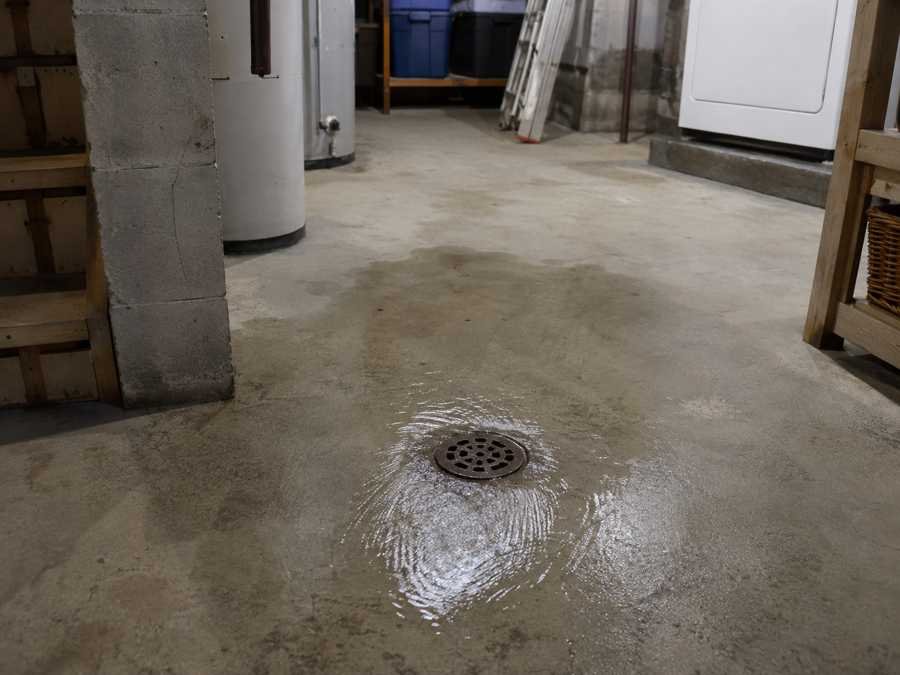
Because water follows elevation.
A floor drain in a basement or lower level is often one of the lowest open connections to the drainage system.
When water rises inside a sewer line, the lowest available opening may therefore show the change before fixtures located higher in the building.
The floor drain itself is not automatically the source of the condition.
It may simply be the first place where the drainage system becomes visible.
This distinction is useful because repeatedly treating only the floor drain may overlook a restriction farther downstream in the main building sewer or sewer lateral.
The same principle explains why some homes first notice water in a lower shower or bathtub.
Why Does My Toilet Gurgle When It Rains?
A gurgling toilet can indicate changing air pressure inside the drainage system.
Wastewater normally moves through drain pipes while the vent system helps maintain balanced air pressure.
When a main drainage path becomes restricted or the water level in the system changes, air can move through fixture traps and create bubbling or gurgling sounds.
If the toilet gurgles only during substantial rainfall, note that timing.
If the toilet also gurgles when the washing machine drains, when a bathtub empties, or when another toilet is flushed, a restriction in the private drainage system deserves additional attention.
The symptom becomes more informative when you connect it with what else was happening at the same moment.
Why Do Several Drains Slow Down at the Same Time?
Your individual sinks, showers, tubs, and toilets eventually connect into larger drain lines.
When one sink drains slowly, the restriction may be close to that fixture.
When several fixtures throughout the home become slow together, the shared portion of the drainage system becomes more relevant.
That shared section may include the building drain or main sewer lateral.
This is one of the easiest ways to distinguish an isolated fixture issue from a broader drainage condition.
Heavy rain can make an existing main line restriction easier to detect because the system has less reserve capacity available.
Does a Sewer Backup After Rain Mean I Need Sewer Line Replacement?
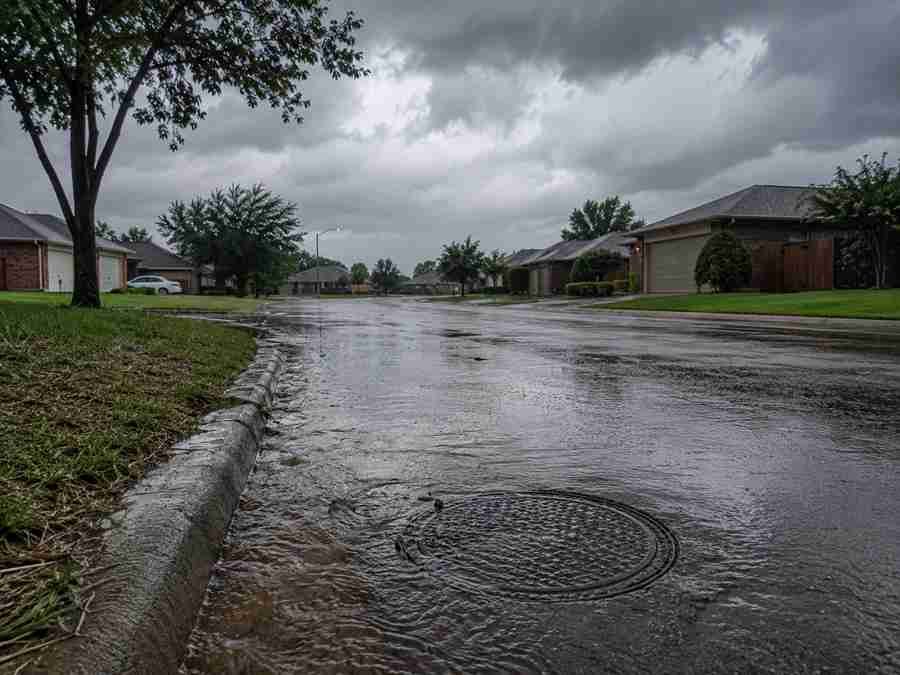
No.
Heavy rain by itself cannot tell you whether a sewer line needs replacement.
The correct response depends on what is actually happening inside or around the line.
A removable obstruction has a very different solution from an offset joint.
Root growth has a different solution from a severe pipe collapse.
Groundwater entering through several deteriorated joints presents a different situation from elevated flow in the public sewer main.
A sewer camera inspection can help reveal roots, standing water, cracks, offsets, pipe material, and other visible conditions.
The inspection should support the diagnosis rather than begin with an assumption that replacement is necessary.
Can Drain Cleaning Solve a Rain Related Sewer Backup?
Sometimes.
If the private sewer line has a substantial buildup or obstruction that is reducing available flow capacity, appropriate drain cleaning can restore more usable space inside the pipe.
However, cleaning cannot seal an open pipe joint, correct every settled section, or control conditions occurring in a public sewer main.
This is why identifying the mechanism matters.
An informational diagnosis should answer two separate questions:
What is restricting or adding water to the system?
Where is that condition located?
Once those questions are answered, the appropriate next step becomes much clearer.
What Is a Sewer Camera Inspection Looking For?
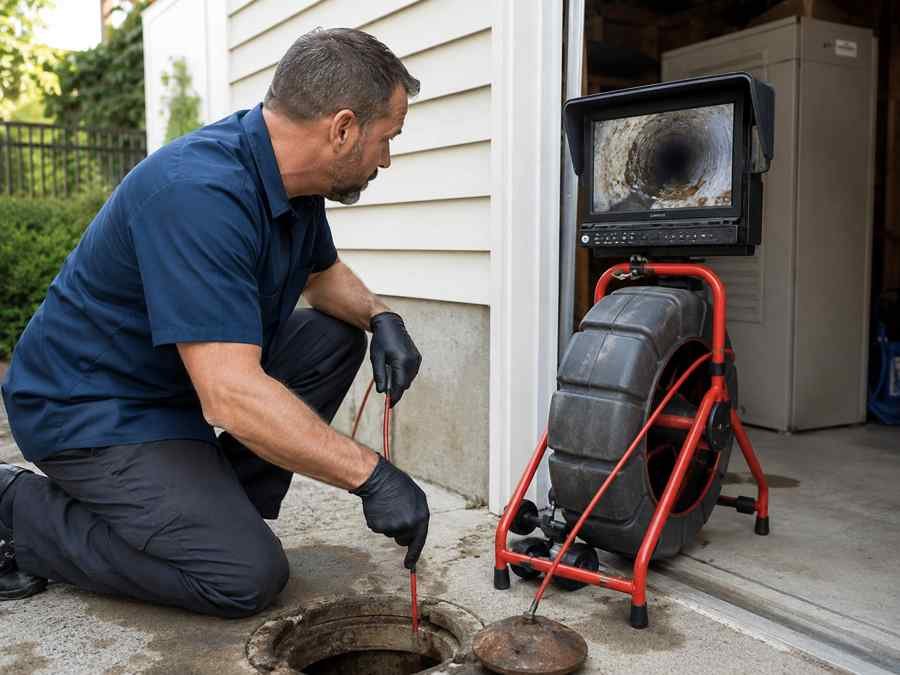
A sewer camera gives a direct view inside accessible portions of the sewer lateral.
Rather than simply confirming that water is moving again, the inspection can look for the condition that explains why the system responded poorly during wet weather.
Useful findings can include root intrusion, open or offset joints, areas of standing water, debris accumulation, changes in pipe material, cracks, deformation, and sections that appear to have settled.
Timing still matters.
Tell the plumber that the backup happens specifically during or after rain.
That detail can change how the inspection findings are interpreted.
A small pipe defect may be much more relevant when the symptom appears only after the surrounding soil becomes saturated.
What Is a Backwater Valve?
A backwater valve is designed to allow wastewater to move away from a building while helping restrict reverse flow toward the building when downstream sewer conditions change.
It can be valuable for certain properties with a known risk of sewer flow returning from the downstream side.
It should not be treated as a universal answer to every rain related backup.
The plumbing layout, valve location, existing sewer condition, accessibility, and the identified cause of the backup all matter.
A backwater valve also does not replace maintenance of a private sewer line that contains roots, significant buildup, displaced joints, or structural concerns.
The best prevention strategy begins with knowing where the water is coming from.
Could Downspouts, Foundation Drainage, or a Sump System Affect the Sanitary Sewer?
They can if stormwater is improperly entering the sanitary drainage system.
EPA identifies sources such as downspouts, sump pumps, and foundation drains as examples of direct pathways that can contribute to rainfall related inflow when they are connected to sanitary sewers.
This is important because stormwater volumes during a strong rainfall event can be much greater than ordinary household wastewater flow.
Roof runoff, foundation drainage, yard drainage, and sanitary sewage should therefore be understood as different parts of the property’s water management system.
If a rain related backup keeps returning, identifying where stormwater is being directed around the property can be just as useful as inspecting the sewer itself.
What Should I Do When My Sewer Backs Up During Heavy Rain?
First, reduce household wastewater entering the drainage system. Pause showers, laundry, dishwashing, toilet flushing when practical, and other high flow activities until you understand whether the sewer can carry additional water.
Keep people and pets away from wastewater that has entered living areas. Sewer water should be treated as contaminated water because sanitary sewers carry household wastewater.
Next, record what happened.
Note when the rain started, when the backup appeared, which fixture showed it first, whether several drains were affected, whether anyone was using a large amount of water at the time, and how long after the rain the drainage returned toward normal.
Ask nearby neighbors whether they noticed a similar event.
Those observations can provide useful diagnostic information later.
If there is reason to believe the public sewer main may be involved, contact Oklahoma City Utilities so the municipal side can be evaluated.
If the pattern appears isolated to your property, an inspection of the private building sewer or lateral can help identify the condition.
Why the Timing of the Backup Matters So Much
One of the most valuable pieces of information you can collect costs nothing.
Watch the clock.
A backup that begins almost immediately after intense rainfall can point toward a different wet weather response than one that develops many hours after prolonged soil saturation.
EPA explains that direct inflow and groundwater infiltration can have different timing characteristics. Direct inflow tends to respond more closely to rainfall, while water moving through soil into sewer defects can continue influencing flow after rainfall has ended.
For a homeowner, you do not need to calculate sewer hydrographs.
Simply record whether the drainage change happens:
during the rain,
immediately after the rain,
several hours later,
or only when household fixtures are also being used.
That timeline can make the eventual diagnosis much more efficient.
How Can Oklahoma City Homeowners Reduce the Chance of Another Rain Related Backup?
Start with information rather than assumptions.
Know the condition of the private sewer lateral if backups have happened more than once.
Keep the sewer cleanout accessible so the line can be evaluated efficiently.
Pay attention to several drains slowing together rather than treating every slow fixture as an unrelated issue.
Direct roof and surface water through appropriate drainage pathways rather than allowing stormwater to collect around the foundation or enter the sanitary system through an improper connection.
If mature trees grow near the sewer route, periodic evaluation can help identify root entry before the opening becomes heavily restricted.
If a property has experienced reverse flow associated with downstream sewer conditions, ask whether backwater protection is appropriate for the plumbing layout.
Most importantly, identify whether the recurring pattern belongs to the private sewer lateral or the municipal sewer system.
Prevention becomes much more effective once the source is known.
Private Sewer Lateral or Public Sewer Main: Why Responsibility Matters
This is an especially important Oklahoma City question.
The sewer lateral connects your property to the public sewer main.
Oklahoma City states that when a stoppage is located in the City main, City crews are responsible for repairing the main and restoring service. When the condition is located in the private sewer line connecting the property to the City main, responsibility belongs to the property owner.
This is another reason to avoid assuming that every rain related sewer backup needs the same solution.
Before deciding what should be cleaned, repaired, replaced, or protected, establish which side of the system is actually involved.
Related: Who Is Responsible for a Sewer Backup in Oklahoma City? Private Sewer Line vs City Main
What We Have Learned From Oklahoma City Plumbing Systems
Providing plumbing service in Oklahoma City over the years has reinforced one practical lesson: symptoms make much more sense when they are evaluated in context.
Rainfall matters.
So does soil moisture.
Pipe condition matters.
So do roots, slope, joints, household water use, fixture elevation, neighborhood conditions, and the capacity available downstream.
A homeowner who says, “My basement drain backed up,” has provided one piece of information.
A homeowner who says, “My lowest floor drain rises only during prolonged rain, the upstairs drains normally on dry days, and two neighbors noticed the same thing,” has provided a much clearer diagnostic picture.
That context is valuable because good sewer diagnostics should narrow possibilities before anyone talks about a major repair.
Frequently Asked Questions About Sewer Backups After Heavy Rain in Oklahoma City
Can heavy rain really cause a sewer backup in Oklahoma City?
Yes. Heavy rainfall can increase wet weather flow in sanitary sewer systems through infiltration and inflow. Groundwater can enter damaged or leaking sewer components, while other stormwater pathways can increase system flow. A private sewer restriction or downstream capacity condition can then become more noticeable during the rain.
Why does my sewer only back up when it rains?
A rain specific pattern often means wet weather is adding a condition that is absent during dry periods. Possibilities include groundwater infiltration through sewer defects, increased downstream sewer flow, or an existing partial restriction that becomes significant when available capacity decreases.
Why does my basement floor drain back up when it rains?
The floor drain is often one of the lowest openings connected to the building drainage system. If water levels rise inside the sewer, the lowest fixture can be the first place where the change becomes visible. The actual source may be farther downstream.
Can tree roots make a sewer backup worse during rain?
Yes. Roots inside a sewer lateral can reduce the open area available for wastewater flow. The line may continue working during ordinary use but respond differently when wet weather adds additional flow or groundwater to the system.
How do I know whether the sewer backup is my responsibility or the City’s?
The location of the condition matters. Oklahoma City distinguishes between the homeowner’s private sewer line and the public City main. Similar symptoms affecting nearby properties may justify contacting the City, while an issue isolated to one property may point more strongly toward the private lateral. Inspection is the best way to establish location rather than relying on symptoms alone.
Will a sewer camera find the cause of a rain related backup?
A camera can identify many important private line conditions, including roots, displaced joints, areas holding water, debris, cracks, and visible pipe deterioration. It cannot by itself explain every municipal hydraulic condition, so the inspection findings should be considered together with rainfall timing and neighborhood observations.
Should I replace my sewer line because it backs up after storms?
Not automatically. Replacement should be based on the actual condition of the sewer pipe, not the weather pattern alone. A restriction that can be cleared, a root entry point, a displaced joint, groundwater infiltration, a settled section, and a City main condition can all require different responses.
Can drain cleaning prevent another backup?
Drain cleaning can help when accumulated material or another removable obstruction is reducing capacity in the private line. It will not correct every structural pipe condition or a municipal sewer issue. Diagnosis should determine whether cleaning addresses the actual cause.
Does a gurgling toilet after heavy rain mean the main sewer line is clogged?
It can indicate that air and water movement inside the drainage system has changed, but it does not prove a complete blockage. Pay attention to whether multiple fixtures are affected and whether the gurgling also occurs during household water use on dry days.
What information should I give a plumber about a rain related sewer backup?
Explain when the rainfall began, when the backup appeared, which drain or fixture responded first, whether multiple fixtures were involved, whether the home was using significant water, whether the issue happens during dry weather, whether the line has been cleaned before, and whether nearby homes experienced similar symptoms.
Final Takeaway
If your sewer backs up after heavy rain in Oklahoma City, treat the rainfall as an important diagnostic clue rather than automatically assuming the rain itself is the entire problem.
The most useful question is not simply, “How do I clear the backup?”
It is:
What changes in my sewer system when it rains?
The answer may involve groundwater entering a private lateral, reduced capacity from roots or buildup, a shifted or settled pipe section, unusual stormwater entry, increased flow in the municipal sewer system, or more than one of these conditions occurring together.
Determine where the extra water or restriction exists first.
Once that is clear, you can choose a solution that addresses the actual cause instead of repeatedly treating the visible symptom.