
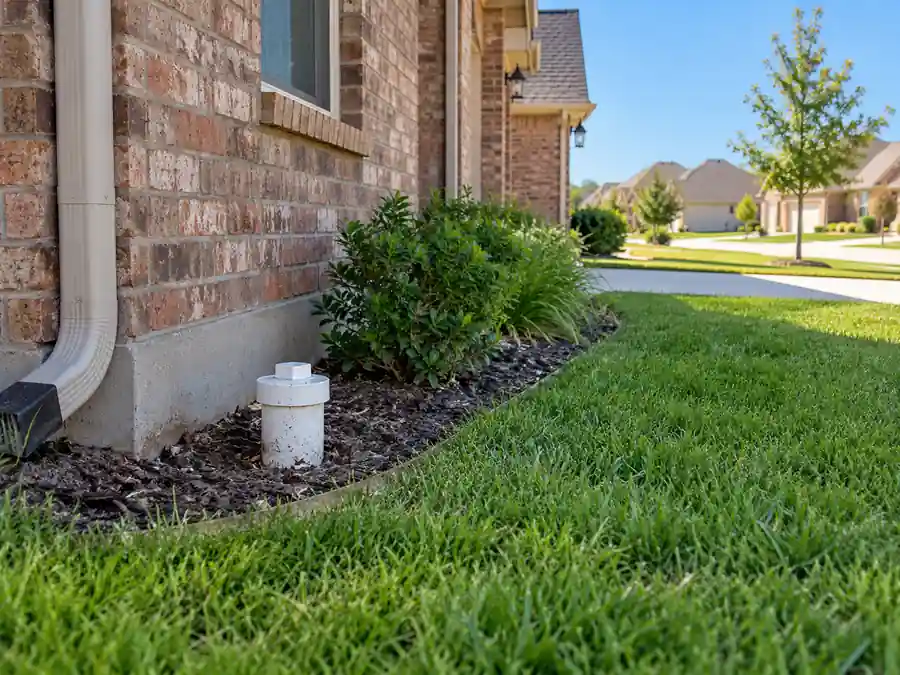
A residential sewer cleanout commonly looks like a capped pipe about 3 to 4 inches wide and may sit above the soil, flush with the lawn, inside a small access box, or beneath landscaping.
Knowing this location is useful even when every drain in your home is flowing perfectly. The cleanout gives direct access to the main sewer line for sewer camera inspection, drain cleaning, root removal, hydro jetting, and other plumbing work.
For Oklahoma City homeowners, understanding the difference between the cleanout, the private sewer lateral, and the public sewer main also makes it easier to understand who is responsible for each section of the system.
Quick Answer: Where Is a Sewer Cleanout Usually Located?
A main sewer cleanout is commonly located in one of these areas:
Near the exterior foundation of the house.
Between the house and the street.
Near the side of the home where major bathrooms are located.
In the front or side yard along the route of the sewer lateral.
Inside a garage, utility area, crawl space, or other accessible plumbing area.
Under grass, mulch, decorative rock, or landscaping when the cleanout has gradually become covered.
Your exact sewer cleanout location depends on the age of the home, plumbing layout, foundation style, sewer route, previous renovations, and how the drainage system was installed.
The simplest principle is this: find the route that wastewater takes from your home toward the public sewer main, then search along that corridor.
What Is a Sewer Cleanout?
A sewer cleanout is an access opening connected to your main drainage or sewer piping.
Think of it as a service entrance into the sewer line.
Instead of accessing the main line through a toilet, fixture drain, or another plumbing opening, a plumber can use the cleanout to introduce equipment directly into the sewer system.
A cleanout can provide access for:
Sewer camera inspection.
Main drain cable cleaning.
Hydro jetting.
Pipe locating equipment.
Inspection of the sewer lateral.
Root removal.
Diagnosis of recurring drainage conditions.
The cleanout itself is not the sewer line. It is an access point connected to the sewer line.
What Does a Sewer Cleanout Look Like?
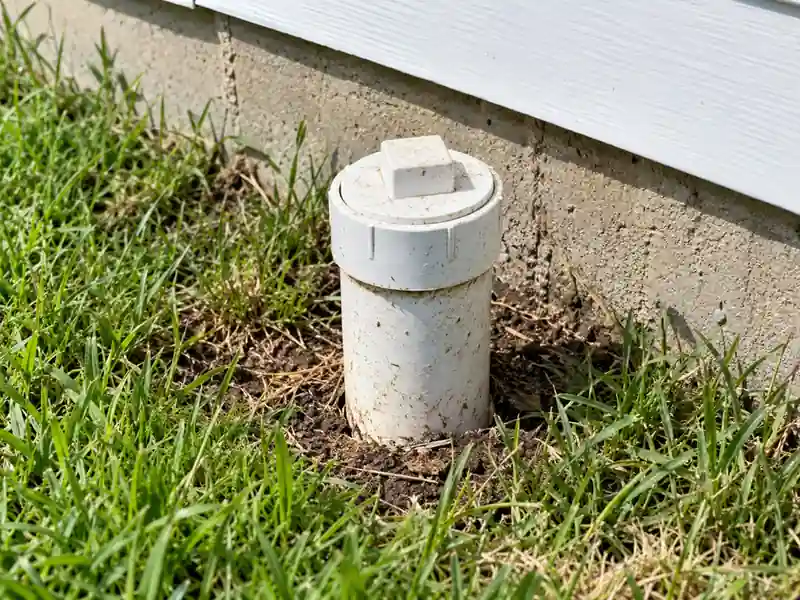
A residential sewer cleanout commonly looks like a short vertical pipe with a removable threaded cap.
The most recognizable cleanouts are made from white PVC, although cleanouts can also use black plastic, cast iron, brass, or other plumbing materials depending on the age and construction of the property.
A typical main sewer cleanout is approximately 3 to 4 inches in diameter. Ranking plumbing resources consistently describe residential cleanouts within this general size range.
Look for a Round Pipe With a Cap
The pipe may extend several inches above the lawn or landscaping.
Other cleanouts sit almost level with the ground.
The cap may have a raised square section in the center so a plumber can turn it with the appropriate tool.
Look for PVC Near the Foundation
Many modern drainage systems use PVC.
A white capped PVC pipe coming from the soil near your exterior wall is one of the easiest sewer cleanout configurations to recognize.
Look for Metal on Older Plumbing Systems
Older sewer systems may use cast iron or metal cleanout fittings.
An older cleanout can blend into surrounding materials, especially when it has been painted, weathered, or partially covered.
Look for an Access Cover
Some cleanouts are protected inside a small ground level access box or beneath a cover.
Because designs vary, avoid assuming every round lid in your yard is a sewer cleanout. Irrigation components, water system access points, utility boxes, and other underground systems may also have visible covers.
Where Is the Main Sewer Cleanout Outside the House?
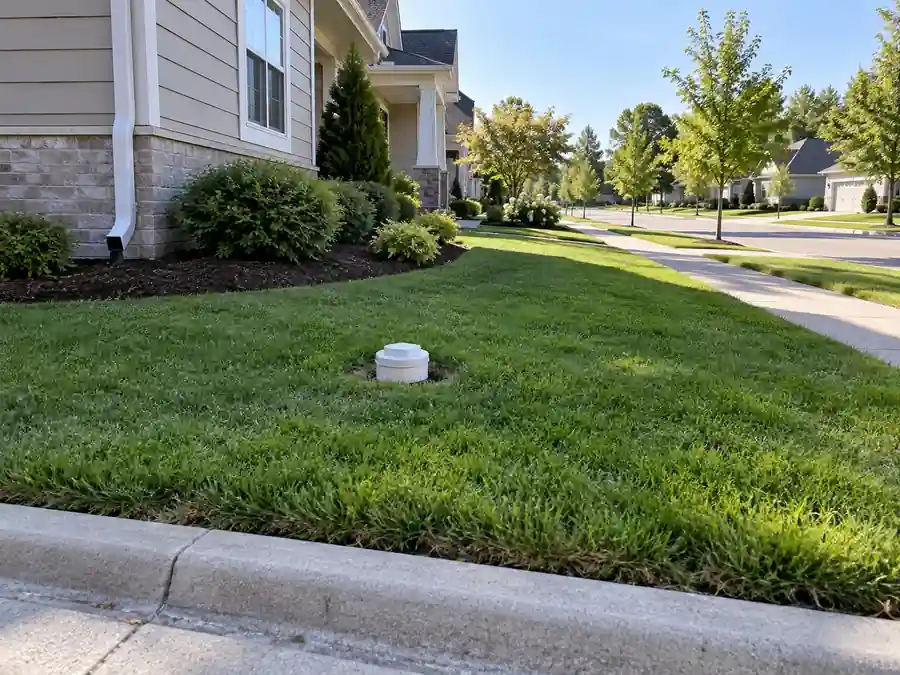
For many homeowners, the outdoor search is the best starting point.
Walk around the exterior of the home and pay close attention to the area immediately beside the foundation.
Then look outward toward the street.
Residential sewer laterals generally connect the building drainage system with the larger sewer system serving the property. That makes the route from the house toward the street one of the most useful search corridors.
Start Near the Foundation
Walk the full exterior perimeter.
Look closely near plumbing heavy areas such as bathrooms, laundry areas, and the portion of the structure where the primary building drain likely exits.
Search both the front and side of the home.
A cleanout can be easy to overlook because only the cap may be visible.
Follow the Likely Sewer Line Toward the Street
Once you identify the likely exit point for the main drain, imagine the line continuing toward the public sewer connection.
Walk that area carefully.
Look for:
A capped PVC pipe.
A circular cap at soil level.
A cleanout box.
A small opening among landscaping.
A pipe near a sidewalk or driveway edge.
An area where a cap may have become covered over time.
National guidance commonly places outdoor cleanouts between the home and the street along the route of the main sewer line.
Could My Sewer Cleanout Be Near a Bathroom?
Yes.
The cleanout is often located near the portion of the home where the main drainage piping leaves the structure.
Because bathrooms contain toilets, tubs, showers, and sinks connected to drainage piping, the exterior wall near a major bathroom can be a useful place to inspect.
This does not mean every cleanout sits directly outside a bathroom.
Plumbing layouts vary substantially.
Use the bathroom location as a clue rather than an exact rule.
Can a Sewer Cleanout Be Inside the House?
Yes.
While homeowners often picture a sewer cleanout in the yard, cleanout access can also be located inside or beneath parts of the house.
Possible interior locations include a garage, crawl space, utility room, basement, plumbing access area, or near the main building drain.
Check the Garage
Look along walls and floors where large drainage piping enters or exits the structure.
A capped fitting may provide access to the main drainage system.
Check the Crawl Space
If your home has a crawl space, follow the larger diameter drainage pipe toward the point where it leaves the foundation.
Cleanout fittings may be installed along accessible sections of this piping.
Check Utility Areas
Laundry rooms, mechanical areas, and utility spaces sometimes provide practical access to plumbing infrastructure.
Look for larger diameter piping with a removable threaded plug.
Follow the Main Drain Pipe
If visible plumbing is available, identify the largest wastewater pipe and trace its direction toward the exterior wall.
This can help establish the likely route of the building sewer.
Where Is My Sewer Cleanout If I Cannot See It?
A cleanout can still exist even when nothing obvious is visible.
Landscaping changes over many years can gradually conceal an outdoor sewer cleanout.
Grass grows.
Mulch gets added.
Flower beds change elevation.
New soil is introduced.
Decorative stone is installed.
Patios, walkways, fences, and yard improvements may also change what is visible around the original plumbing layout.
Several current sewer cleanout guides specifically identify grass, mulch, landscaping, concrete, and other surface changes as common reasons an existing cleanout becomes difficult to see.
How to Find a Buried Sewer Cleanout
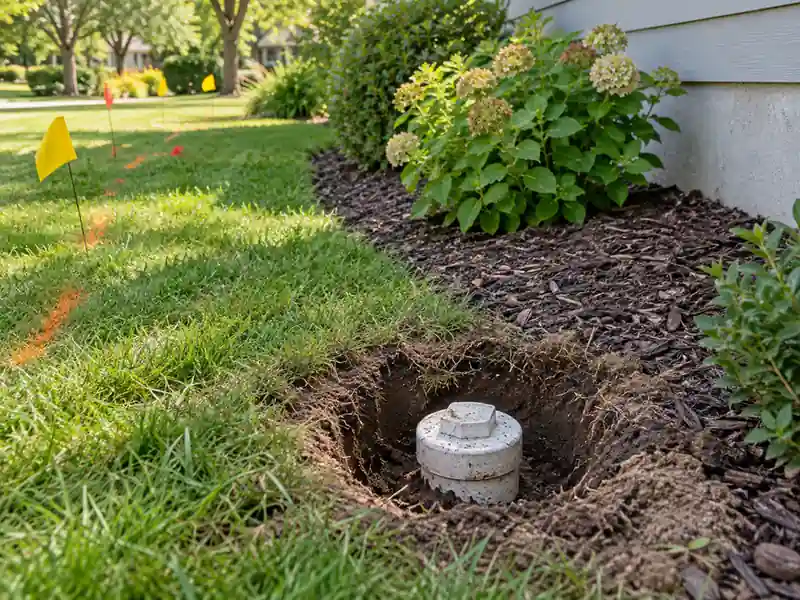
A buried sewer cleanout deserves a more systematic search.
Random digging is inefficient because several different utilities may share the same general area of a property.
Use documentation and the expected sewer route first.
Step 1: Identify Where the Main Drain Leaves the House
Look at bathrooms, plumbing walls, crawl space piping, visible drain stacks, utility areas, and previous plumbing work.
Your goal is to estimate the building drain exit point.
Step 2: Determine the Direction of the Public Sewer Connection
The building sewer typically continues from the home toward the public sewer system.
The exact route can vary, so property records are valuable whenever they are available.
Step 3: Inspect the Likely Path Carefully
Move grass and lightweight landscaping material carefully.
Inspect flower beds and the edge of the foundation.
Look for circular outlines, exposed pipe edges, access boxes, or caps hidden just beneath surface material.
Step 4: Check Property Documents
Your property survey, construction drawings, plumbing plans, site plan, renovation records, or previous plumbing invoices may provide useful clues.
Some documents may show the building sewer, utility route, or cleanout location.
Step 5: Use Professional Locating Equipment When Needed
A plumber can often trace the sewer line using specialized equipment.
One common method involves sending a sewer camera or locator transmitter into an accessible drain or sewer line.
A receiver can then help identify the route and location from above ground.
This approach is especially useful when landscaping, concrete, additions, or years of property changes have made the original layout difficult to identify visually.
Should I Dig to Find My Sewer Cleanout?
If excavation becomes necessary, underground utility locating should come first.
OKIE811 states that homeowners, property owners, and tenants must contact OKIE811 before digging so participating underground facility operators can locate and mark their underground lines.
The organization advises submitting the request before excavation and explains that private underground facilities may require additional locating resources.
That matters because the area between your house and street can contain several underground systems.
Calling 811 gives you more information about what may be beneath the excavation area before soil is disturbed.
For a privately owned sewer lateral, a plumber or private utility locating service may still be useful when the exact sewer route needs to be identified.
Can Oklahoma City Help Me Locate the Sewer Line?
Oklahoma City provides a useful local resource.
The Oklahoma City Utilities Department lists its Utilities Engineering Help Desk at 405 297 2666 for water and sewer line location questions.
This does not mean the City will necessarily identify the exact location of every privately owned cleanout on a residential lot.
It does give Oklahoma City homeowners an authoritative place to ask about municipal water and sewer infrastructure and available records.
Property documents, plumbing plans, a sewer camera, electronic locating equipment, and direct inspection may still be needed to determine the exact cleanout location on private property.
What Is the Difference Between a Sewer Cleanout and the Main Sewer Line?
These terms are closely connected but describe different components.
The main sewer line, often called the building sewer or private sewer lateral in a residential context, carries wastewater away from the house toward the municipal sewer system.
The sewer cleanout is an access fitting connected to that drainage system.
The cleanout cap closes the access opening.
The municipal sewer main is part of the larger public wastewater collection system.
Understanding these entities helps when discussing sewer cleaning, camera inspection, pipe repair, ownership, and maintenance.
Who Is Responsible for the Sewer Line in Oklahoma City?
This is one of the most useful local distinctions for Oklahoma City homeowners.
The City of Oklahoma City explains that responsibility depends on where a sewer stoppage is located.
When the condition is within the City sewer main, City crews handle the City main.
When the condition is within the private sewer line connecting the house to the City main, repair or replacement is the responsibility of the home or property owner.
That distinction makes locating your sewer cleanout even more useful because the cleanout provides access to the private drainage system serving your property.
Why Knowing Your Sewer Cleanout Location Matters
Homeowners often begin searching for a cleanout only when they want a sewer line inspected or cleaned.
Finding it in advance gives you a clearer understanding of your plumbing system.
It can also help a plumber access the main line efficiently when equipment such as a drain cable, hydro jetter, sewer camera, or locator is needed.
After you find the cleanout, document the location.
Take a photo.
Record which side of the house it is on.
Measure its approximate distance from a permanent feature such as a corner of the foundation.
Keep the information with your home maintenance records.
This simple documentation can be useful years later when landscaping has changed.
Can a House Have More Than One Sewer Cleanout?
Yes.
A house may contain more than one cleanout depending on the drainage layout.
Cleanouts may exist at different portions of a plumbing system to provide access to different drain runs.
Some properties also have a two way cleanout, which provides access in two directions.
This arrangement can allow plumbing equipment to travel toward the house or toward the street depending on the fitting configuration.
Other cleanouts may serve individual branch drains rather than the main sewer lateral.
That is why finding a capped pipe does not automatically tell you which part of the drainage system it serves.
How Do I Know Whether I Found the Main Sewer Cleanout?
Size and location provide useful clues.
A main line cleanout is generally larger than the smaller drain access points serving individual fixtures or branch lines.
If the pipe is approximately 3 to 4 inches wide, sits along the expected building sewer route, and connects with the main drainage system, it may be the main cleanout.
A professional can confirm the connection by inspecting the piping or using sewer camera equipment.
Is the Sewer Cleanout the Same as the Water Shutoff?
No.
A sewer cleanout and a water shutoff serve completely different systems.
The sewer cleanout provides access to wastewater drainage piping.
The main water shutoff controls incoming pressurized water.
The water meter measures water supplied to the property.
The cleanout provides access to water leaving the property through the drainage system.
Correct identification matters because several utility covers and pipes may be visible around a residential yard.
Is a Sewer Cleanout the Same as a Sewer Vent?
No.
A plumbing vent allows air movement within the drainage system and helps plumbing traps and drains function properly.
A cleanout is designed primarily to provide physical access to drainage piping.
Both can be part of the same overall plumbing system, but they have different purposes.
What Can a Plumber Do Through a Sewer Cleanout?
Once the correct cleanout has been identified, it becomes a useful access point for several diagnostic and maintenance procedures.
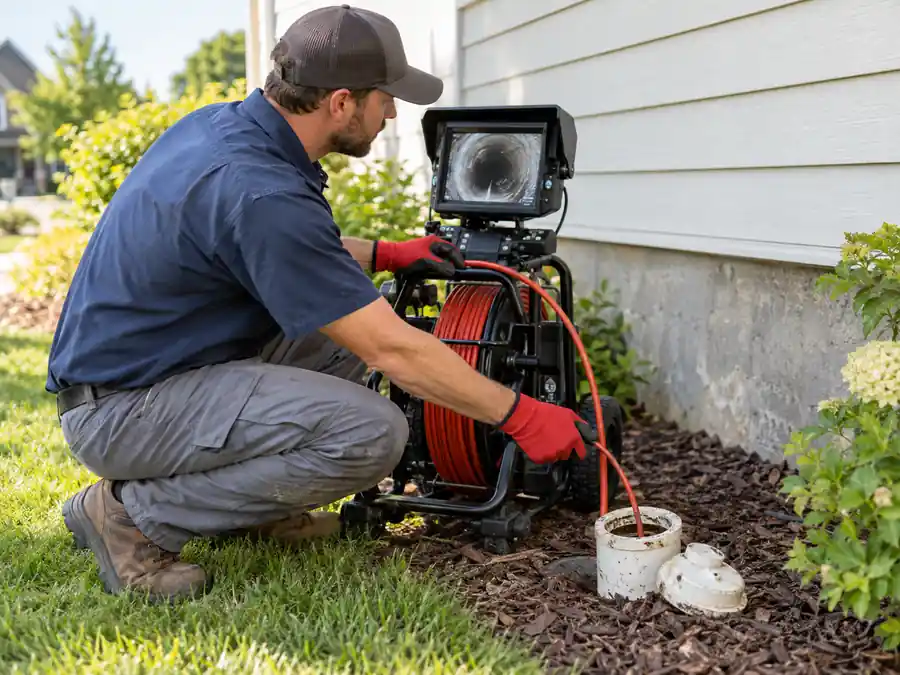
Sewer Camera Inspection
A sewer camera can travel through accessible piping and provide a direct view of the interior.
This can reveal the pipe material, joints, buildup, roots, offsets, changes in direction, and other physical characteristics of the sewer lateral.
Sewer Line Locating
Many camera systems can be paired with locating technology.
The transmitting device inside the line can help identify the pipe route from the surface.
This is particularly useful when the homeowner wants to understand where the sewer line crosses the yard.
Drain Cleaning
Professional drain equipment can access the sewer line through the cleanout.
The cleanout provides a direct route into the drainage system without requiring access through many indoor fixtures.
Hydro Jetting
When appropriate for the pipe material and condition, hydro jetting equipment may also use cleanout access to clean the interior walls of a drainage line.
What If My House Has No Visible Sewer Cleanout?
Start by checking the exterior foundation, likely sewer route, crawl space, garage, utility area, landscaping, property records, and previous plumbing documentation.
If an accessible cleanout still cannot be identified, professional locating can determine whether one is buried or whether the plumbing configuration uses another access arrangement.
Older properties, remodeling projects, additions, landscaping changes, and previous plumbing alterations can all affect how easy the access point is to find.
The objective is not to guess.
The objective is to identify the actual route of the main drainage system.
Oklahoma City Homes Deserve Local Plumbing Knowledge
Plumbing layouts make more sense when they are evaluated in the context of the actual property rather than a generic national diagram.
Our team has extensive plumbing experience in Oklahoma City, and that local experience helps us understand how sewer laterals, cleanouts, yards, foundations, and municipal connections can vary from one property to another.
The useful question is not simply, “Where are sewer cleanouts normally located?”
The better question is, “Where should the cleanout be based on how this particular Oklahoma City home connects to the sewer system?”
That approach leads to a much more accurate answer.
Related: Why Does My Sewer Back Up After Heavy Rain in Oklahoma City?
Frequently Asked Questions About Sewer Cleanout Locations
Where is my sewer cleanout most likely located?
Start outside near the foundation and follow the likely route of the main sewer line toward the street. Look for a capped 3 to 4 inch pipe, ground level cap, or access box.
What does a sewer cleanout look like?
A sewer cleanout usually looks like a capped plumbing pipe. Modern versions are often white PVC with a threaded cap. Older systems may use cast iron or metal fittings.
Is the sewer cleanout always outside?
No. A sewer cleanout can also be located in a garage, crawl space, basement, utility area, or another accessible location connected to the main drainage piping.
Can a sewer cleanout be buried?
Yes. Grass, mulch, soil, landscaping material, and property improvements can conceal an existing cleanout over time.
How deep is a sewer cleanout?
There is no universal depth. Some cleanout caps are above ground, some are flush with the surface, and others become covered beneath soil or landscaping. The actual sewer line itself may be substantially deeper than the cleanout opening.
Is the sewer cleanout usually near the bathroom?
It can be. The exterior wall near a major bathroom is a useful place to inspect because bathroom fixtures connect into the drainage system, but the exact plumbing route differs by property.
Summary
If you are wondering where your sewer cleanout is, begin at the exterior foundation and follow the likely path of the main sewer line toward the street.
Look for a capped 3 to 4 inch pipe, a ground level cleanout cover, or an access point hidden by grass or landscaping. If nothing is visible, check the garage, crawl space, utility areas, property plans, and plumbing records.
For Oklahoma City homeowners, remember that the private sewer line connecting the home to the City main is generally the property owner’s responsibility, while the City maintains its sewer main.
Before excavation, contact OKIE811, and when the location remains unclear, sewer camera and electronic locating technology can help map the line accurately.
Once you find your cleanout, photograph it, measure its position from a permanent point on the house, and keep that information with your property records. That small step can make understanding and maintaining your home’s sewer system much easier.