Your toilet gurgles when the washing machine drains because pressure changes in connected drain or vent pipes push or pull air through the toilet’s water seal. A partial drain restriction, a plumbing vent issue, or a restriction farther along the sewer line can cause this. We provide drain and toilet diagnostics in Oklahoma City, and this guide explains how to read the symptoms and choose a sensible next step.
The most useful clues are what happens to the toilet water, how quickly the shower drains, and whether other fixtures react.
If the toilet water keeps rising or wastewater appears in the shower, tub, or floor drain, stop using water throughout the home and arrange prompt plumbing assistance.
How Your Washing Machine and Toilet Affect Each Other
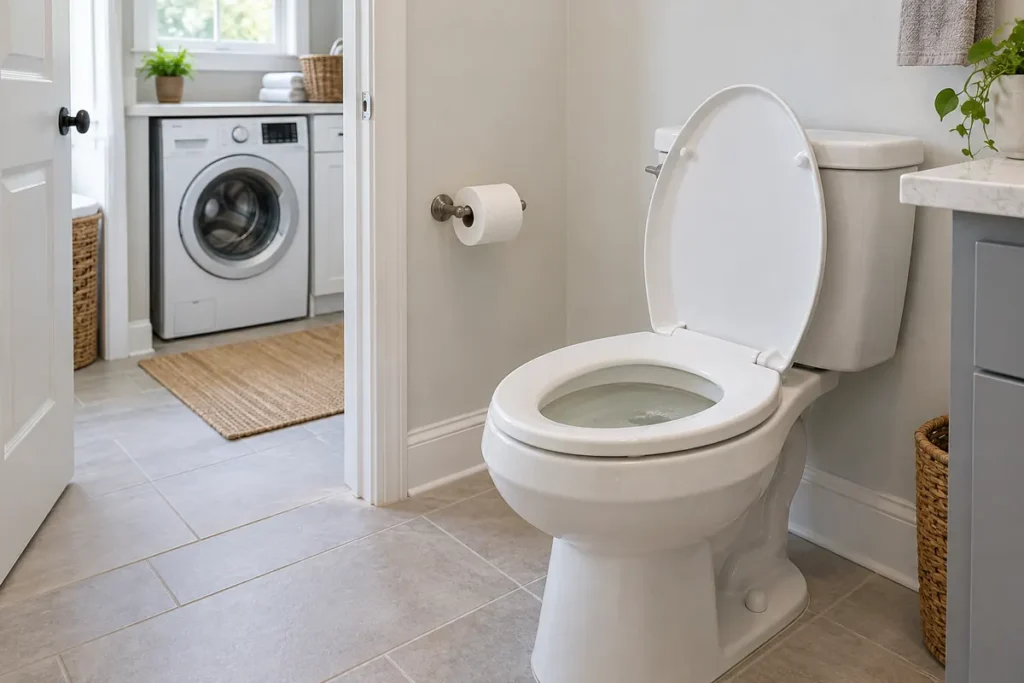
Your washing machine, shower, and toilet have separate fixture connections, but their wastewater eventually enters shared drainage piping.
Those connections may meet beneath the bathroom, farther along a branch drain, or at the building drain that carries wastewater out of the house. Being in different rooms does not mean the fixtures operate independently.
The toilet also contains a curved internal passage called a trapway. Water retained in that passage creates a seal between the bathroom and the drainage system.
Plumbing vents help air move through the drainage system while protecting these water seals. When pressure changes become excessive, the toilet bowl may bubble, gulp, or lose some water. Plumbing venting requirements specifically address protecting fixture traps from excessive pressure differences.
This explains why replacing the toilet is rarely the first step when another fixture consistently triggers the sound. The connected piping needs attention too.
Why the Washing Machine Makes the Toilet Gurgle
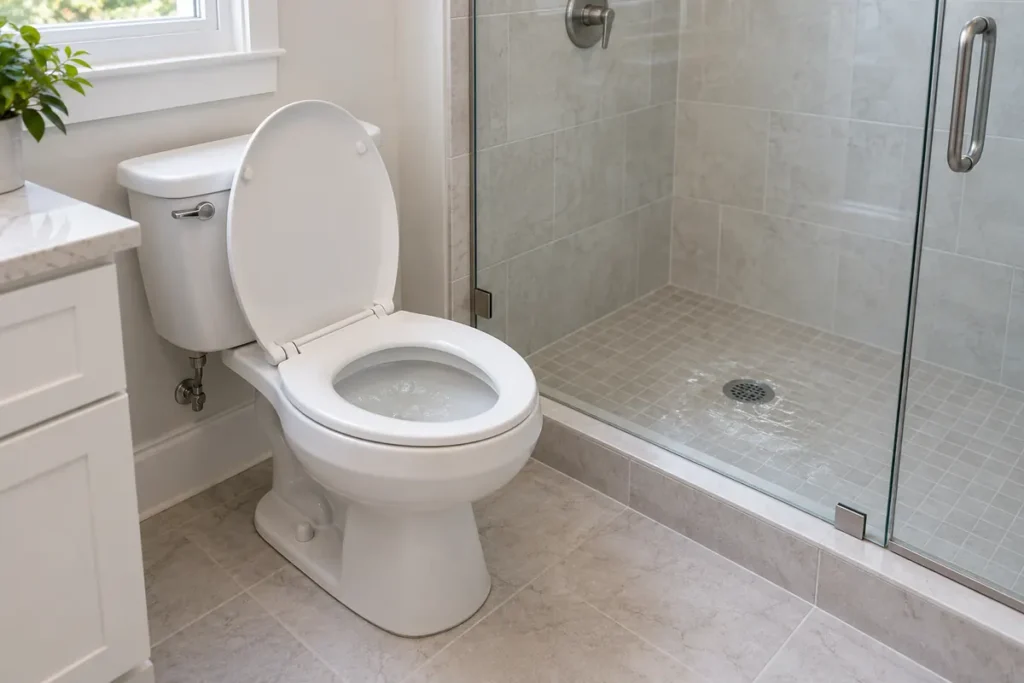
A washing machine pumps wastewater into its drain connection during the drain cycle. That discharge arrives in a relatively concentrated burst.
A partially restricted pipe may handle a small amount of water comfortably while struggling with a washer’s discharge. As water occupies more of the available pipe opening, air movement and drainage pressure change.
The toilet can react even while the washer appears to finish its cycle normally.
Pay attention to when the sound occurs:
| When you hear the sound | What deserves attention |
|---|---|
| When the washer pumps water out | Shared drainage, venting, and the washer discharge connection |
| When the washer fills with clean water | Supply piping, appliance valves, or a separate tank noise |
| Only at the washer as pumping finishes | Normal appliance operating sounds may explain it |
| In the toilet bowl, with visible bubbles | Pressure is affecting the toilet’s water seal |
Some washing machines normally make sucking or gurgling sounds while draining. That applies to sounds at the appliance. Visible bubbling in a separate toilet needs a drainage assessment.
Why the Toilet Gurgles When the Shower Drains
A shower usually adds water more steadily than a washing machine. If the toilet reacts during shower use, consider what the shower itself is doing.
The Shower Drains Slowly and the Toilet Bubbles
This combination makes a restriction in the shared bathroom drainage path more plausible.
Hair collected at the shower strainer can slow the shower. However, a toilet reacting at the same time also raises questions about the piping beyond the shower’s individual drain connection.
Removing visible hair may improve shower drainage while leaving a shared restriction unresolved.
The Shower Drains Freely but the Toilet Gulps
Venting deserves attention, particularly if the toilet water drops after the sound.
A drain restriction remains possible, so normal shower drainage alone does not settle the diagnosis. The timing and bowl movement help determine what to inspect.
Both the Shower and Washer Trigger the Same Toilet
This pattern broadens the investigation to the piping and vent arrangements those fixtures share.
If fixtures in other rooms also drain slowly, the building drain or private sewer connection becomes more important to check. The actual pipe layout determines where the investigation should begin.
What Can Cause a Gurgling Toilet?
A Partial Restriction in a Shared Drain
A drain can still carry water while deposits reduce its usable opening.
Depending on the pipe and the fixtures connected to it, material may include lint, hair, soap deposits, grease, wipes, or accumulated waste. Older piping may also contain scale.
Farther downstream, roots or displaced pipe joints can interfere with flow.
A useful distinction is whether the same problem returns after clearing. Recurring restrictions can justify checking the pipe’s condition and identifying why material collects at that location.
Professional drain cleaning addresses an identified restriction. The access point and equipment should match the affected pipe.
A Restricted or Unsuitable Plumbing Vent
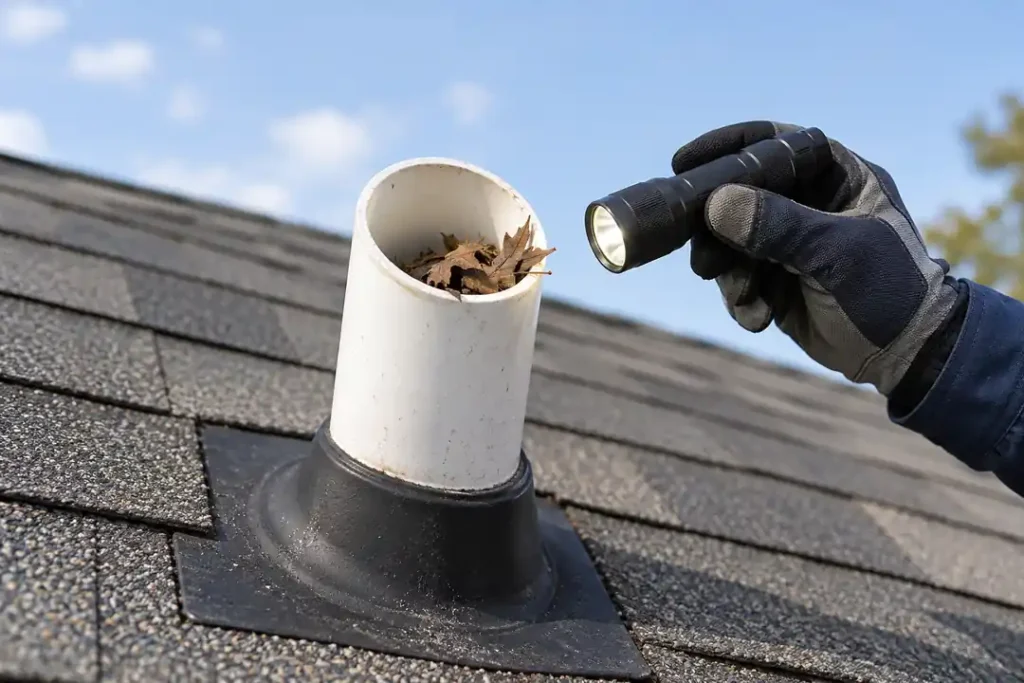
A venting issue changes how air enters or leaves the drainage system.
Possible explanations include debris in a vent opening, an altered vent connection, or an installation arrangement that needs correction.
Some systems also use an air admittance valve, often called an AAV. This valve opens to admit air when pressure inside the drain falls, then closes again.
An AAV provides air admission. It does not release positive pressure from a restricted drain, so adding one is not a universal solution for toilet bubbling. Its suitability and installation must also meet local requirements.
A Restriction in the Building Drain or Sewer Lateral
The building drain collects wastewater from the home. The private sewer lateral carries it toward the public sewer connection.
A restriction along this shared route can affect several fixtures. A toilet may gurgle during laundry while a bathtub, shower, or floor drain shows the first visible backup.
Several affected fixtures make the shared drainage route important to investigate. Their symptoms still need to be matched to the property’s layout.
A Drainage Arrangement Revealed by a New Washer or Remodel
If the sound began after a washer replacement, bathroom renovation, or laundry relocation, mention that timing during diagnosis.
A plumber may need to review the receiving drain, standpipe, trap, vent connection, and appliance installation instructions.
The washer drain hose also needs the installation arrangement specified for that model. Manufacturer guidance calls for space around the hose at the standpipe connection rather than an airtight seal. Exact hose placement and drain height should follow the appliance instructions.
What the Toilet Water Can Tell You
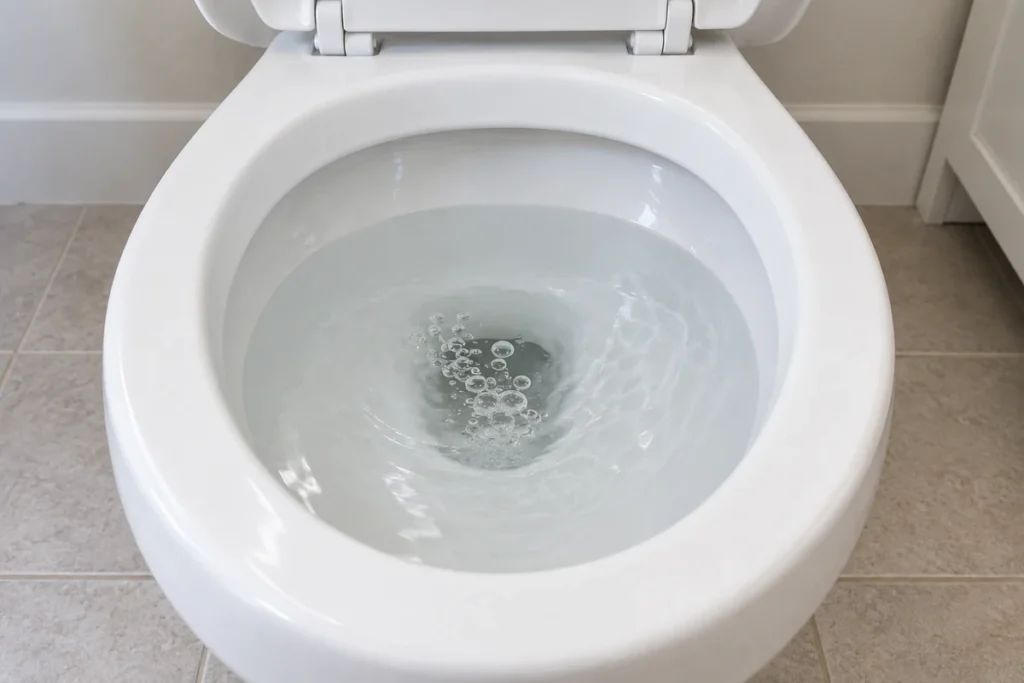
Watch the water in the bowl during an event you have already noticed. Avoid starting extra laundry cycles or repeatedly flushing to reproduce it.
| What you notice | What it may suggest | Sensible next step |
|---|---|---|
| Bubbles rise during washer discharge | Air is being pushed through the toilet’s water seal | Record whether other fixtures also react |
| The bowl gulps and the water level drops | Pressure may be drawing on the trap seal | Have the venting and connected drainage assessed |
| The shower slows while the toilet bubbles | A shared bathroom drain restriction becomes more plausible | Describe both symptoms together |
| Several drains become slow | A restriction farther along the shared drainage route | Arrange prompt diagnosis |
| Water rises in the toilet or enters another fixture | Wastewater is backing up | Stop household water use |
| The bowl stays still while the tank hisses | A fill valve or other tank component may be involved | Assess the toilet’s tank operation |
These observations guide the investigation. They cannot identify an exact blockage location by themselves.
What Should You Do Before a Plumber Arrives?
1. Pause Laundry and Watch for Rising Water
Avoid adding another washer load while the cause remains unclear.
If water is rising or backing up, stop using showers, sinks, toilets, and other appliances that discharge wastewater. Pause the washer using its normal controls if you can do so safely.
2. Record Which Fixtures React
Write down the triggering fixture and every fixture that responds.
For example:
“The hall toilet bubbles when the washer drains. The nearby bathtub has also been draining slowly. The kitchen sink appears normal.”
That description provides more direction than reporting a noisy toilet alone.
3. Note Any Recent Changes
Useful details include a new washer, moved laundry connections, bathroom work, previous drain clearing, or symptoms that began during heavy rain.
For recurring problems, keep earlier inspection reports or camera footage available.
4. Keep Drain Openings Accessible
Clear stored items from around accessible plumbing and identify any known sewer cleanout.
Leave cleanout caps closed. A backed up line can contain wastewater behind the cap.
5. Leave Roof Vent Work to a Professional
A roof vent assessment may be appropriate, but it should follow a diagnosis of the drainage pattern.
Adding water through a roof vent or inserting equipment without knowing the condition below can complicate the situation.
6. Keep Chemicals Out of the Investigation
Chemical drain cleaners cannot establish whether the cause is a venting defect, roots, accumulated deposits, or pipe damage.
If you have already used a product, tell the plumber its name and when you applied it before any clearing work begins.
Will Plunging the Toilet Help?
A flange plunger can help with some clogs close to the toilet.
It is more relevant when the toilet itself flushes poorly and the other fixtures behave normally. When washer or shower drainage repeatedly makes the toilet bubble, the investigation needs to include shared piping and vents.
Repeated plunging may leave a restriction farther along the drainage route untouched.
Tank components require a different assessment. A flapper or fill valve controls flushing or refilling, while bubbling in response to another fixture involves the drainage side. Our toilet repair information covers the fixture itself.
How a Plumber Finds the Cause?
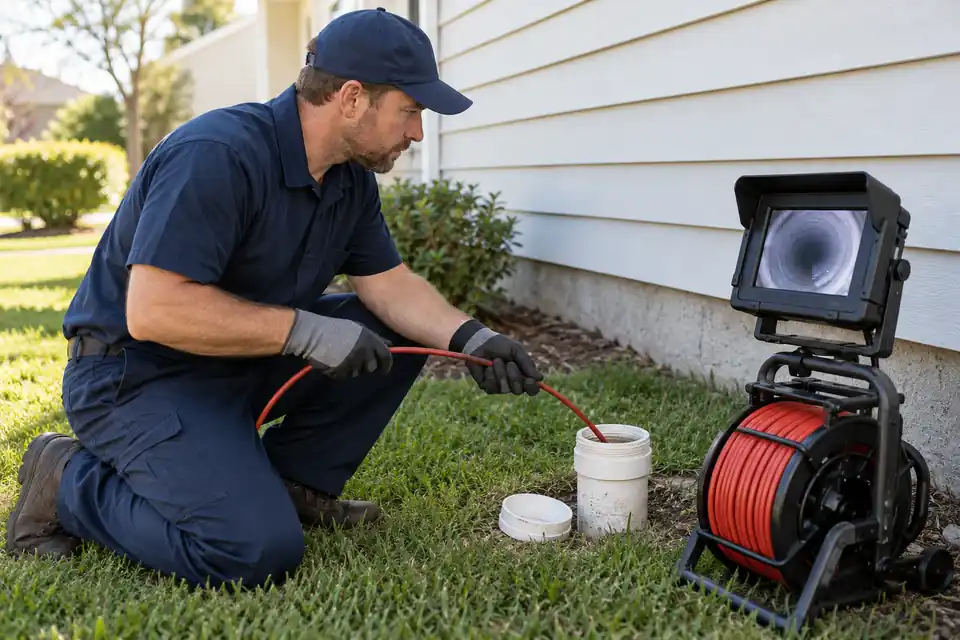
We are experienced plumbers in OKC, and the useful starting point is the relationship between fixtures: what sends water into the system, what reacts, and where those pipes connect.
A focused assessment may include:
- Reviewing the symptoms and available drainage layout.
- Checking an appropriate access point for evidence of a restriction.
- Clearing an identified obstruction with equipment suited to the pipe.
- Inspecting accessible piping with a sewer camera when the cause is recurring or pipe damage is suspected.
- Assessing the venting arrangement when the evidence points toward a pressure control issue.
- Checking drainage under controlled conditions after corrective work.
A camera can document visible roots, deposits, separated joints, or damaged pipe sections. A heavily obstructed pipe may need clearing before useful footage is available.
Ask to see what supports any repair recommendation. Confirmed pipe defects may justify sewer line repair; the location and condition of the defect should guide that decision.
What Oklahoma City Homeowners Should Check
Confirm Which Utility Serves Your Property
An Oklahoma City mailing address alone may not identify the wastewater provider for every property across the metro.
Check your utility bill when reporting a suspected public sewer issue. If nearby homes develop similar symptoms at the same time, that information is useful to the utility.
For properties served by Oklahoma City, the City publishes (405) 297 3334 as its Water/Sewer Dispatch number.
Mention Whether Heavy Rain Changes the Symptoms
If toilet bubbling appears during or after heavy rain, include that detail when reporting the problem.
The timing helps direct questions about the private connection, groundwater entering drainage piping, and conditions in the public sewer. It does not establish the source on its own.
Identify Whether the Home Uses Septic
A septic property needs a different assessment from a home connected to a public sewer.
Gurgling combined with slow drains, a septic alarm, or wet ground near the drainfield warrants attention from a qualified septic professional. The assessment may include the tank, outlet components, pumps where fitted, and drainfield performance.
Gurgling alone cannot tell you whether pumping is needed.
How to Help Keep Shared Drains Flowing
After the underlying cause has been addressed, a few habits support dependable drainage.
Use a shower strainer and remove collected hair regularly. Put wipes and hygiene products in the trash, including products labeled flushable. Keep cooking grease out of household drains.
Follow the washer manufacturer’s detergent and maintenance instructions. Clean only filters identified as accessible to the user.
For septic properties, spread laundry through the week to reduce concentrated water loading. EPA guidance specifically recommends avoiding excess water use and spacing laundry loads.
If the same gurgling returns, compare it with the earlier service findings. That history can help distinguish another accumulation from a drainage or venting condition that needs further attention.
Related: Where Is My Sewer Cleanout? What Oklahoma City Homeowners Should Know
Frequently Asked Questions
Does a Gurgling Toilet Always Mean the Main Sewer Line Is Clogged?
Several conditions can produce the sound, including a shared branch restriction or venting issue. Multiple slow drains and wastewater appearing at a low fixture make a restriction farther along the shared drainage route more concerning.
Why Does the Downstairs Toilet Gurgle When the Upstairs Washer Drains?
Wastewater from upstairs eventually enters piping serving the lower part of the building. Pressure changes along that connected route can affect the downstairs toilet. The pipe layout, bowl movement, and behavior of other fixtures help determine where to investigate.
Can I Keep Using the Washing Machine if the Toilet Only Gurgles?
Pause further loads until the recurring symptom is assessed. A pipe may still pass water while its available capacity is reduced. If water rises or appears in another fixture, stop household water use and arrange prompt help.
Could a New Washing Machine Be Causing the Sound?
A new washer may make an existing drainage limitation noticeable, or its discharge connection may need adjustment. Check the installation against the model instructions and have the receiving drain and vent arrangement assessed before deciding which component needs work.
Should I Call an Appliance Technician or a Plumber?
Visible bubbling in the toilet during washer discharge points toward a plumbing assessment. A sound confined to the washer, an appliance error code, or water remaining in the drum may also require appliance diagnosis. Describe where the sound occurs and whether another fixture reacts.