
Homes built in Oklahoma City between the 1950s and 1970s very often have cast iron drain pipes, and those pipes are now reaching the stage where owners benefit most from knowing their condition, their warning signs, and how to care for them.
We provide sewer camera inspection, drain cleaning, and plumbing service across the metro, and cast iron pipes in Oklahoma City homes from this era are a regular part of our work. As an experienced plumber in OKC, we like to give owners a clear picture of what sits inside their walls and beneath their slab, since a little knowledge makes maintenance simple and keeps surprises away.
This guide focuses on the mid century ranch homes and suburban neighborhoods of the postwar decades. It explains what was installed, how to recognize it, what happens inside the pipe as it ages, and the steps that keep a cast iron system flowing well.
Why This Era Is Different From Older Historic Homes
Houses from the early 1900s, such as those in Heritage Hills and Mesta Park, carry their own set of plumbing materials, which we cover in our guide to historic OKC plumbing. Homes from the 1950s to the 1970s belong to a different building period with its own pipe types, its own foundation style, and its own timeline.
Key differences include:
- Slab on grade construction. Many OKC ranch homes of this period sit on concrete slabs, so the main drain lines run beneath the floor.
- Postwar suburban growth. Neighborhoods across Midwest City, Del City, Bethany, Moore, and the northwest and south sides of Oklahoma City expanded rapidly in these decades.
- A mix of materials. Builders used cast iron for the drain, waste, and vent system, while the yard lateral often used clay tile or fiber pipe, and plastic pipe began to appear toward the end of the period.
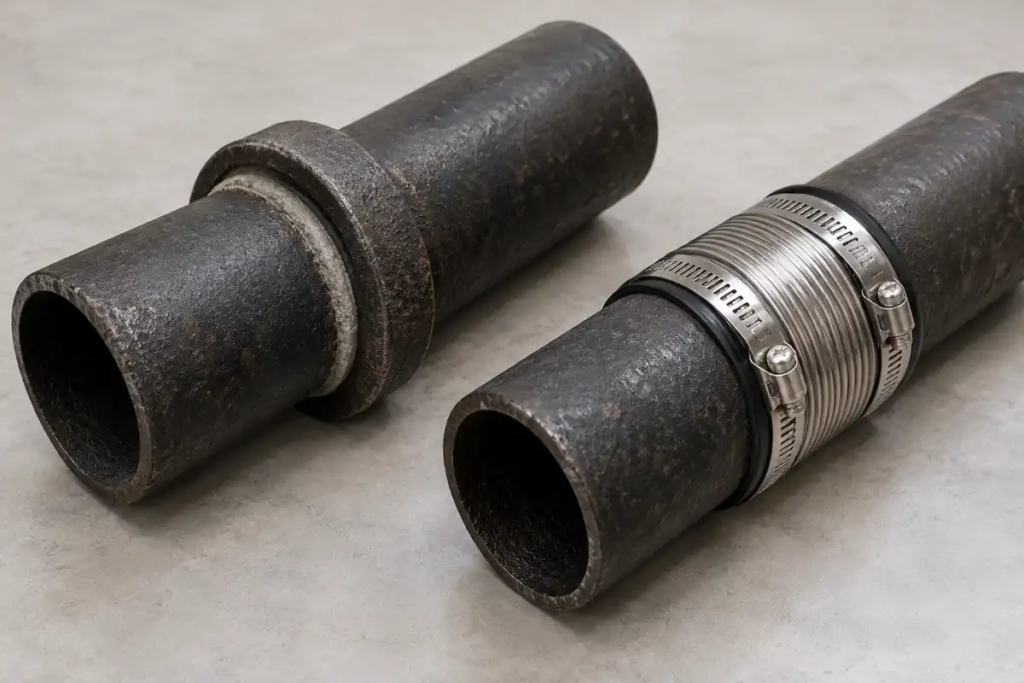
- Different joint styles. Early homes used bell and spigot joints sealed with lead and oakum, and later homes used hubless cast iron connected by rubber couplings with stainless steel bands.
What Was Installed Inside Your Home
Cast Iron Drain, Waste, and Vent Lines
Cast iron was the standard for the main drain stack, the horizontal drain lines, and the vent stack that exits through the roof. It was valued for its strength, its quiet performance, and its long service life.
Hub and Spigot Pipe
Hub and spigot pipe has a flared end on each section. The next section slides into the flare, and the joint is packed with oakum fiber and sealed with molten lead. Homes from the 1950s and early 1960s often contain this style.
Hubless Pipe
Hubless pipe has plain ends joined by a neoprene gasket and a stainless steel clamp. It installed faster, and it became common as the decades progressed. Many homes from the late 1960s and 1970s feature it.
The Transition to Plastic
ABS and PVC began appearing in residential construction in the later part of this period, and many homes today carry a blend of materials. A home might have cast iron beneath the original slab and plastic in a later addition or remodeled bathroom.
How to Identify Cast Iron Pipes in Your Home
Because many of the main lines sit beneath the slab, a few visible clues help:
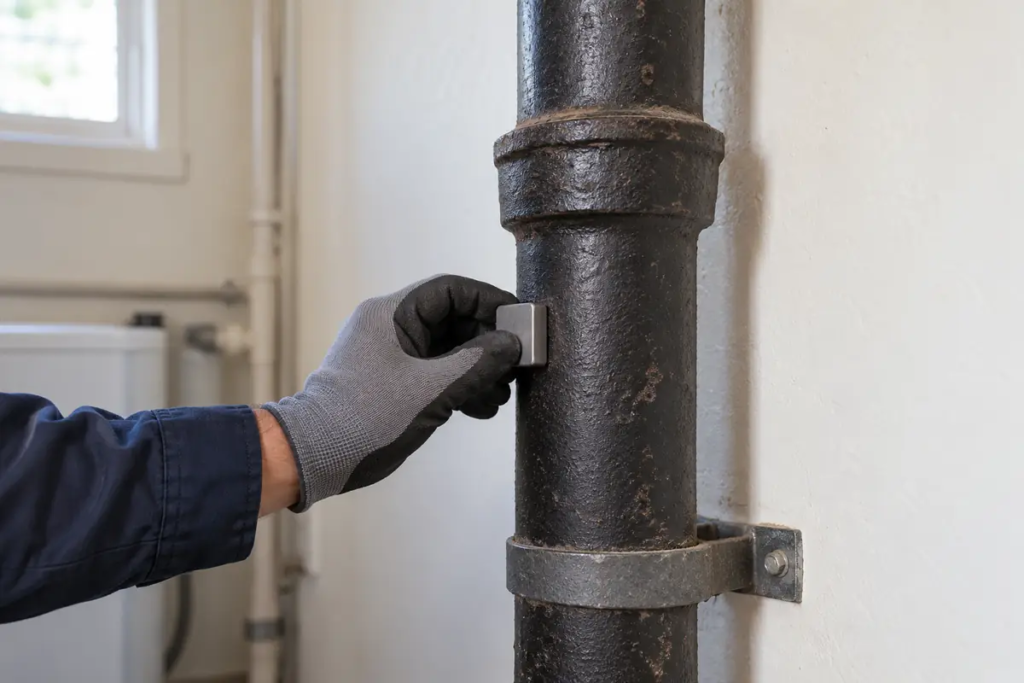
- Look at the vent stack. The vent pipe through the roof or in the attic is often cast iron with a dark finish.
- Check the washing machine standpipe or exposed drain. A black or gray pipe with bulges at the joints suggests hub and spigot.
- Look for stainless steel bands. These clamps point to hubless cast iron.
- Try the magnet test. A magnet sticks to cast iron and does not stick to plastic.
- Tap lightly. Cast iron produces a dull, solid sound, while plastic sounds hollow.
- Scratch an inconspicuous spot. A dark gray metallic surface confirms iron.
- Review the home’s age. Homes built before the mid 1970s most often contain cast iron in the drain system.
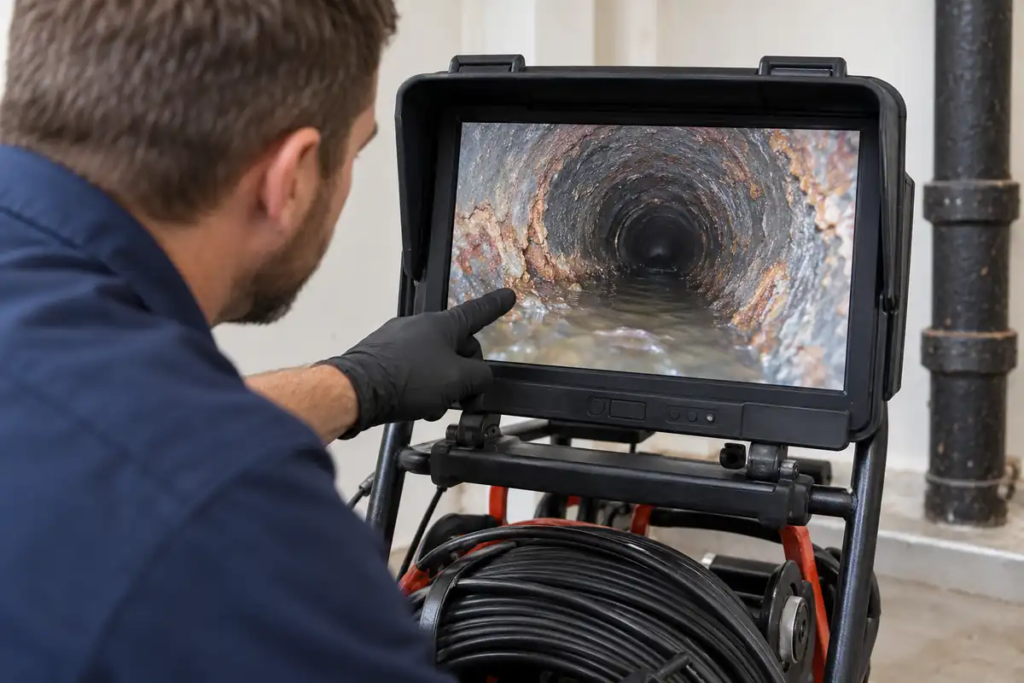
A camera inspection confirms the material and shows the interior condition, which makes it the most reliable way to know for sure.
What Happens Inside Cast Iron Pipes as They Age
Cast iron is a durable material, and many pipes serve for several decades. As the years pass, a few predictable changes take place:
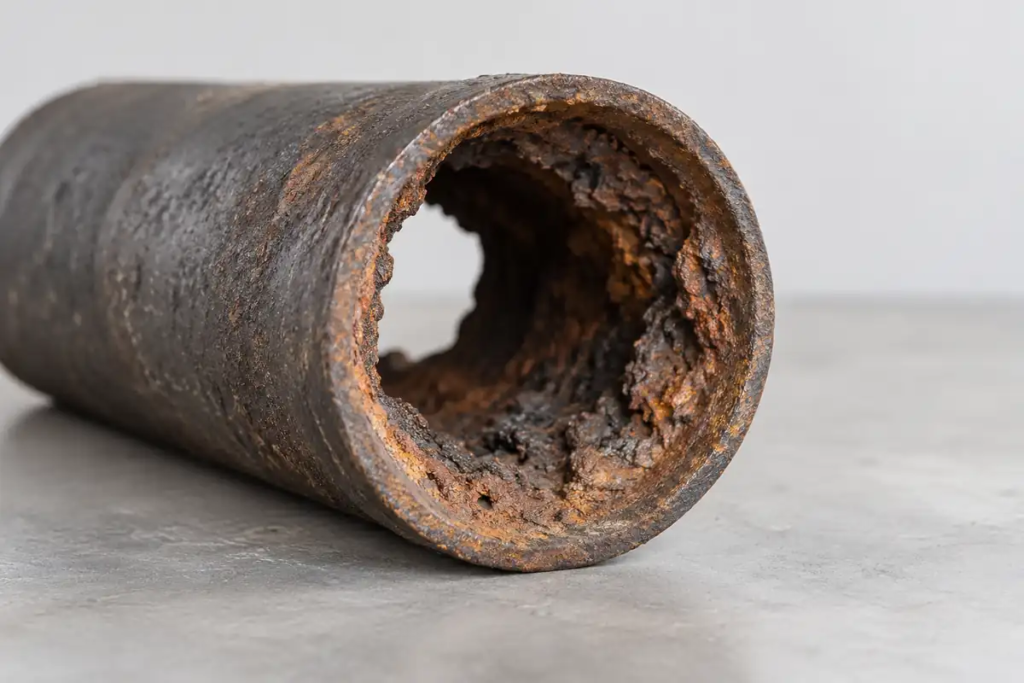
- Surface rust forms. Rust forms a layer on the interior, and in many cases that layer helps slow further wear.
- Scale builds up. Rust nodules, called tuberculation, grow on the pipe wall and create a rough surface.
- Debris catches on the rough surface. Grease, paper, and soap settle on the scale, and the open channel narrows.
- The bottom of the pipe wears. Wastewater flows along the lowest part of the pipe, and over time it can thin the metal along that channel.
- The top of the pipe responds to sewer gas. Gases in the upper part of the pipe can interact with moisture to form mild acids that slowly affect the metal.
- The exterior meets the soil. Oklahoma City clay soil swells and shrinks with moisture, and pipes below or beside a slab experience that movement.
- Joints loosen. Lead and oakum seals and rubber couplings can relax over the decades.
You can read a broader technical discussion of how cast iron corrosion develops in this overview of cast iron pipe corrosion for property professionals.
Warning Signs Worth Noticing
Cast iron systems usually signal their condition gradually. Common indicators include:
- Slow drains in several fixtures
- Gurgling sounds from toilets or tubs
- Recurring blockages that return after cleaning
- Rust colored or dark flecks in drain water
- A sewer odor inside the home, often near a floor drain or bathroom
- Damp or discolored spots on the slab or flooring
- A musty smell in a closet or utility area
- Visible rust blooms on exposed pipe sections
When two or more of these appear together, a camera inspection will explain what is happening inside the line.
What a Camera Inspection Reveals in Cast Iron
| What the camera shows | What it means for you |
|---|---|
| Smooth interior with light surface rust | A healthy pipe that benefits from routine care |
| Rough scale along the walls | Tuberculation, which narrows the pipe and catches debris |
| Heavy nodules and a reduced opening | Advanced scaling that benefits from a cleaning plan |
| A worn channel along the bottom | Thinning along the flow line |
| Flaking or layered rust | Interior surface in a later stage of aging |
| Loose or shifted joint | A connection that has relaxed with time |
| Offset between sections | Ground movement has moved the pipe |
| Transition to clay or fiber in the yard | The point where the cast iron meets the lateral |
A camera pass also shows the exact distance to each finding, so any follow up work can focus on one specific area instead of the entire line. Access usually comes through your sewer cleanout, and our guide on finding your sewer cleanout will help you locate it.
Care Habits That Support Cast Iron Pipes
Schedule a Baseline Camera Inspection
If your home dates from the 1950s to the 1970s and the line has never been viewed, a baseline inspection gives you a clear starting point. That record helps you plan future cleanings and compare changes over time. Homebuyers often include this step, as described in our guide to plumbing checks for OKC homebuyers.
Keep the Interior Clean
Rough scale holds onto grease and paper, so periodic cleaning keeps the channel open. A technician chooses the cleaning method based on what the camera shows, and our comparison of hydro jetting and snaking explains how each approach handles scaled pipe.
Choose Gentle Habits at the Drain
- Dispose of cooking grease in the trash.
- Use drain screens in showers and tubs.
- Flush only toilet paper and human waste.
- Choose a mild approach for routine drain care, and ask a plumber before using strong chemical products on older metal pipe.
Pay Attention to the Yard Lateral
The pipe that carries wastewater from the house to the street often changes material at the foundation. In older neighborhoods, the yard section may be clay tile, where mature trees and roots matter a great deal. Cast iron joints resist roots better than clay, yet the transition points still deserve a look. Our article on how tree roots enter sewer lines explains the process.
Know Your Options Early
When a camera shows a localized area of wear, a targeted repair can restore that section. When the interior shows widespread wear, owners can compare options such as relining, partial replacement, or full replacement. Our sewer line repair page outlines these paths so you can plan at your own pace.
Frequently Asked Questions
Do homes built in the 1950s to 1970s in Oklahoma City have cast iron pipes?
Most homes from this era have cast iron drain, waste, and vent lines, with plastic appearing more often toward the late 1970s. Remodels and additions can introduce other materials, so a camera inspection confirms what your home contains.
How long do cast iron drain pipes last?
Cast iron commonly serves for many decades, often 50 to 100 years depending on conditions. Water chemistry, soil, flow patterns, and maintenance all influence the timeline.
What is the difference between hub and spigot and hubless cast iron?
Hub and spigot sections have a flared end joined with oakum and lead. Hubless sections have plain ends joined by a rubber gasket and a stainless steel clamp. Hubless pipe became more common as the decades advanced.
Can cast iron pipes under a slab be inspected?
Yes. A sewer camera enters through the cleanout or another access point and travels through the line, so no digging or floor removal is needed.
Do tree roots enter cast iron pipes?
Solid cast iron walls resist roots well. Roots can enter at joints, loose couplings, and the transition where the line meets clay or fiber pipe in the yard.
What causes rough, scaly pipe walls?
Rust forms as iron meets moisture and wastewater over many years. The rust builds into nodules that roughen the surface and collect debris.
Should I be concerned if my home has cast iron pipes?
Cast iron is a proven, durable material. Knowing the condition through a camera inspection, and keeping the interior clean, lets owners enjoy the benefits of the original system for as long as possible.
A Practical Path for Mid Century Homeowners
Cast iron pipes have served Oklahoma City homes since the postwar years, and a thoughtful maintenance plan helps them continue. A baseline camera inspection, periodic cleaning guided by what the camera shows, and gentle drain habits give owners clear information and steady performance.