
Fats, oils, grease, wipes, coffee grounds, pasta, rice, eggshells and fibrous food scraps are the main items to keep out of an Oklahoma City kitchen drain. Our plumbing team serves homes across Oklahoma City, and this guide explains what not to put down the drain, why each item matters to your pipes and the city sewer, and what to do with it instead.
Quick Answer: Items That Belong in the Trash, Not the Sink.
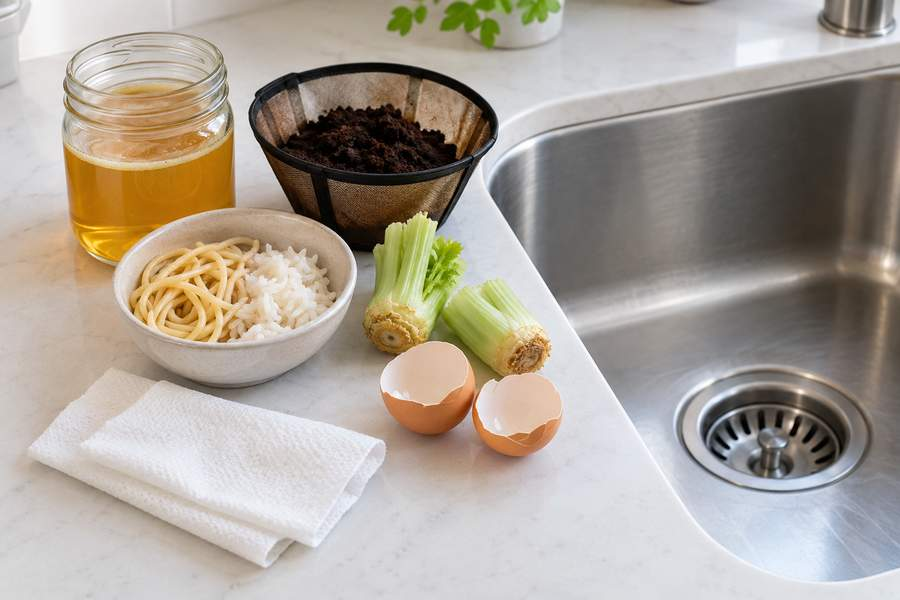
- Cooking oil, bacon grease, butter, shortening and meat drippings.
- Wipes of every kind, including products labeled flushable.
- Used coffee grounds and tea leaves.
- Cooked or uncooked pasta, rice and oatmeal.
- Eggshells, bones, fruit pits and nut shells.
- Celery, corn husks, onion skins, potato peels and other fibrous produce.
- Flour, batter and dough.
- Produce stickers, paper towels and cotton swabs.
- Paint, motor oil, antifreeze and strong chemicals.
- Unused medications.
Water, dish soap and small soft food particles are the only things a kitchen drain is built to carry.
Why Drain Habits Matter in Oklahoma City
Oklahoma City crews respond to more than 3,000 sewer related calls every year, including backups and odors, and most of those calls trace back to what people send down their drains.
The city’s wastewater system stretches across roughly 3,000 miles of pipe, and every sink, dishwasher, shower and washing machine in your home connects to that same network.
The Oklahoma City Utilities Department and its Wastewater Division focus on education because prevention keeps sewer mains flowing and protects neighborhoods from overflows.
The Oklahoma City Water Utilities Trust has also invested in fats, oils and grease control for the sewer system. Residential kitchens add up across the metro, from Midtown and Bricktown to Edmond, Moore, Yukon, Mustang and Del City. Small choices at your own sink support the whole system.
Fats, Oils and Grease (FOG): The Top Item to Keep Out of the Drain
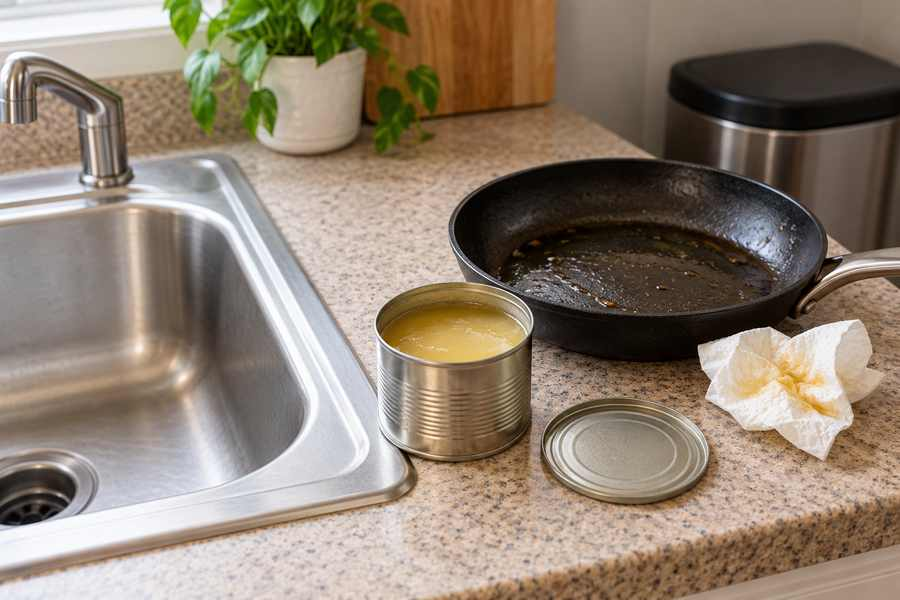
FOG includes cooking oil, bacon grease, butter, margarine, lard, shortening, gravy, salad dressing, mayonnaise and the fat that collects in a skillet after browning meat. Dairy products, sauces and peanut butter count as well.
Grease leaves your pan as a liquid and cools quickly once it meets cold pipe walls. It then thickens into a waxy coating.
Over time that coating gathers food particles, hair, soap residue and wipe fibers, and the passage narrows until water slows to a trickle.
Inside sewer mains, FOG can combine with minerals to form hard, soap like deposits that crews must remove with specialized equipment. Oklahoma’s hard water can add mineral deposits that bond with that coating.
A Better Way to Handle Kitchen Grease
- Let the grease cool in the pan or a heat safe container.
- Pour it into an empty coffee can, jar or carton.
- Place the container in the freezer so the contents firm up.
- Put the sealed container in your trash cart on collection day.
- Wipe greasy pans with a paper towel before washing.
Oklahoma City utility crews recommend this same coffee can method for residents. During holiday cooking season, turkey and ham drippings deserve extra attention, because the days after a big meal are among the busiest for plumbers everywhere.
Wipes: Flushable on the Label, Trash Can in Practice
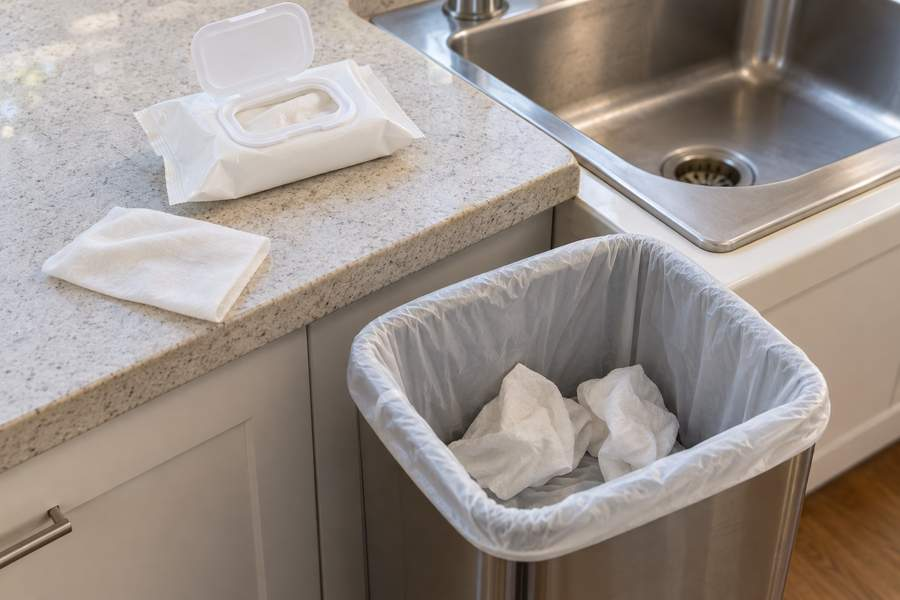
Baby wipes, disinfecting wipes, makeup wipes and adult wipes hold together far longer than toilet paper does. Packaging may say flushable, yet the fibers keep their strength in water, travel to a bend in the line and gather there. Oklahoma City utility spokespeople have shared that these products do not break down the way the packaging suggests.
Toilet paper is designed to fall apart quickly in water, which makes it the only paper product that belongs in the sewer. Paper towels, facial tissue, napkins, dental floss, cotton swabs and feminine hygiene products are all better placed in a lined bathroom trash can.
Coffee Grounds: Small Particles, Big Buildup
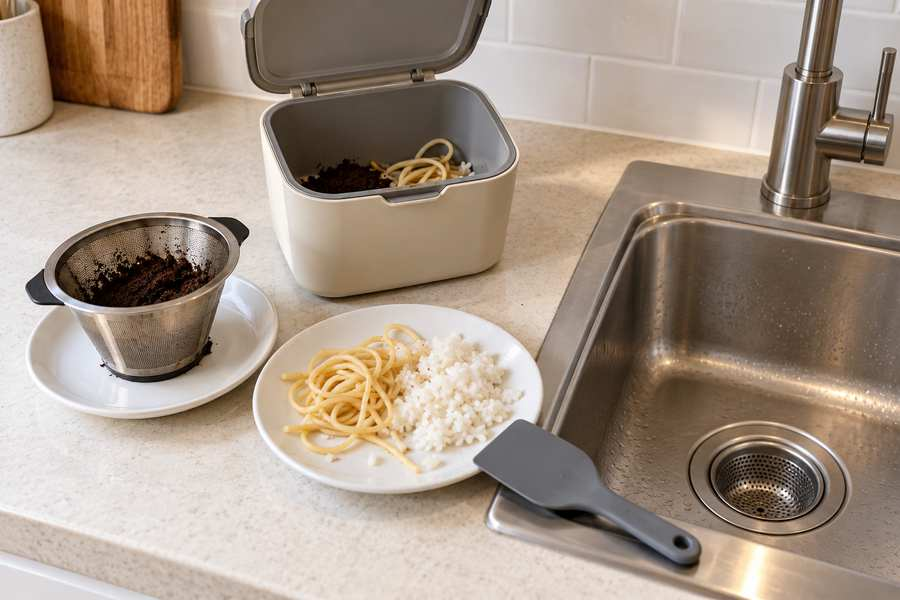
Coffee grounds look like they would wash away, but they do not dissolve. They settle in the curve of the P trap beneath your sink, and when they meet grease already coating the pipe, they form a dense paste. Plumbers frequently name coffee grounds among the most common kitchen drain culprits.
Used grounds make a useful addition to a compost pile or a flower bed, and the trash works well too. Scoop out the last grounds from your mug and reusable pod before rinsing.
Pasta, Rice and Starchy Foods
Pasta, rice, oatmeal and beans absorb water and swell. Once inside a pipe, they thicken into a pasty mass that clings to grease and grounds.
Even the starchy water from boiled pasta carries residue that adds to buildup over many months. Scrape leftover starches into the trash, and let a colander catch noodles over the sink so they land in a bin instead.
Flour, pancake batter and dough behave much like glue when mixed with water, so they also belong in the trash.
Eggshells, Bones, Pits and Fibrous Produce
Many people believe eggshells sharpen disposal blades. In reality, the shell breaks into a fine grit, and the thin membrane inside becomes sticky and holds that grit in the pipe. Compost bins and trash carts are the better destination.
Other items that suit the trash or compost pile:
- Bones from chicken, beef and pork
- Fruit pits and avocado seeds
- Corn husks, celery, asparagus and artichoke leaves
- Onion skins, potato peels and banana peels in large amounts
- Produce stickers, which do not dissolve and can reach screens at the treatment plant
Long strands from fibrous vegetables wrap around disposal blades and the shredder ring, which strains the motor.
Garbage Disposal Myths
A garbage disposal grinds food into smaller pieces, yet it does not make that food safe for your pipes. Ground up grease still cools and coats the line, and ground up starch still thickens. The most helpful habits are:
- Scrape plates into the trash before rinsing.
- Use a sink strainer basket to catch solids.
- Run cold water before, during and after each use.
- Feed the disposal small amounts of soft food at a time.
- Check your owner’s manual for the list of foods your model handles well.
Ice cubes and a few citrus peels now and then are fine for freshening the chamber.
Medications, Paint and Household Chemicals
Pharmaceuticals can pass through treatment systems and reach waterways, so pharmacy take back programs and local drop off events are the preferred route.
Motor oil, antifreeze, paint, solvents and drain cleaners with harsh ingredients belong in household hazardous waste collection.
Oklahoma City offers resources for these materials through its solid waste and environmental programs, and the Oklahoma Department of Environmental Quality shares guidance for the state.
What Your Kitchen Drain Handles Well
- Warm water
- Dish soap in normal amounts
- Small soft food particles rinsed from a plate after scraping
- Water from rinsing clean dishes
Early Signs Your Kitchen Drain Needs Attention
Notice these signals early, and a small adjustment can save a larger repair:
- Water drains slowly in one or more fixtures.
- Gurgling sounds after the dishwasher runs.
- A stale or sour smell near the sink.
- Water that rises in the second basin of a double sink.
- Fruit flies gathering around the drain.
A plumber can inspect the line with a camera, locate the buildup and clear it with professional equipment. A sewer backup that reaches more than one fixture can point to the main line, so it helps to call right away.
Who Maintains Which Pipe?
In many cities, including Oklahoma City, the private sewer line running from your home to the public main is generally the property owner’s responsibility, while the main under the street belongs to the city.
If you are unsure which side a backup is on, the Oklahoma City Utilities Department can help you sort that out, and a plumber can confirm with a camera inspection.
Related: Cast Iron Drain Pipes in 1950s to 1970s Oklahoma City Homes: What Owners Should Know
Frequently Asked Questions
What should never go down a kitchen drain?
Fats, oils, grease, coffee grounds, pasta, rice, eggshells, fibrous vegetables, bones and wipes. Dish soap and water are the safe choices.
Can I pour hot water and dish soap on grease to wash it away?
Hot water moves grease along the pipe for a short time, but it cools again farther down the line and settles there. Cooling and trashing the grease is the dependable method.
Are coffee grounds really a problem for pipes?
Yes. They collect in the trap and bends and combine with grease to build a dense layer. Composting or trashing them keeps pipes clear.
Are flushable wipes safe for Oklahoma City sewers?
Wipes hold their shape in water, even when the package says flushable. Oklahoma City utility staff ask residents to place them in the trash.
Is it okay to put rice or pasta in a garbage disposal?
Starchy foods swell and turn pasty, so they do best in the trash. A small stray piece is fine, but regular habits matter more.
How should I get rid of used cooking oil in Oklahoma City?
Cool it, pour it into a sealable container, freeze it if you like, and place it in your regular trash on collection day. Larger amounts of used oil can go to a recycling location that accepts cooking oil.
Does a garbage disposal make it safe to rinse any food down the sink?
A disposal handles soft scraps in small amounts. Grease, starches, bones and fibrous produce still belong in the trash or compost pile.
Keep Oklahoma City Pipes Flowing
Healthy drains begin with a few steady kitchen habits: scrape plates, cool and trash grease, compost coffee grounds, and keep wipes in the bathroom trash can.
These habits protect your plumbing, support the city wastewater system and help neighborhoods across the metro stay free of overflows.
We are an experienced plumber in Oklahoma City, and we have seen how a few simple routines can keep kitchen lines running well for years.