
To find where a water leak is coming from, start with your water meter, then close the main shutoff valve and watch the meter again. That one sequence tells you whether the water is moving inside the house, under the slab, or in the yard line between the meter and your home. Our Oklahoma City plumbing team offers leak detection across the metro, and the steps below are the same logic our technicians follow before any equipment comes out of the truck.
Water loss can show up as a higher bill, a soft patch of lawn, a damp baseboard, or a faint hiss at night. Each clue has a likely home, and a few simple checks will point you to the right zone.
Start With the Water Meter Test
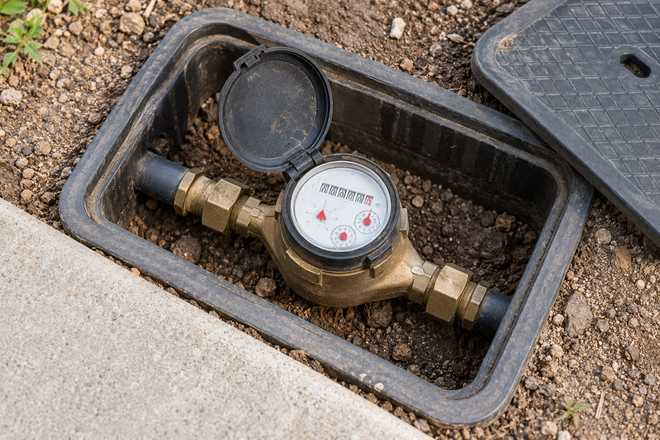
The meter is the most honest witness on your property. Plan on about thirty minutes of quiet water use for this test.
- Close every faucet and pause the dishwasher, washing machine, and ice maker.
- Open the meter box lid carefully, since it can hold dirt, spiders, and standing water.
- Find the low flow indicator, a small triangle, star, or dial that spins when even a thin stream passes through.
- Note the reading, wait fifteen to thirty minutes, and look again.
A still indicator and unchanged numbers suggest water is not moving through your system at that moment. A spinning indicator or changed numbers confirm that water is leaving the plumbing somewhere.
The EPA’s WaterSense program explains why this matters, noting that household leaks can waste nearly 10,000 gallons of water per year on average, which is often the first sign people see on a monthly bill.
The Main Shutoff Test: Inside or Outside?
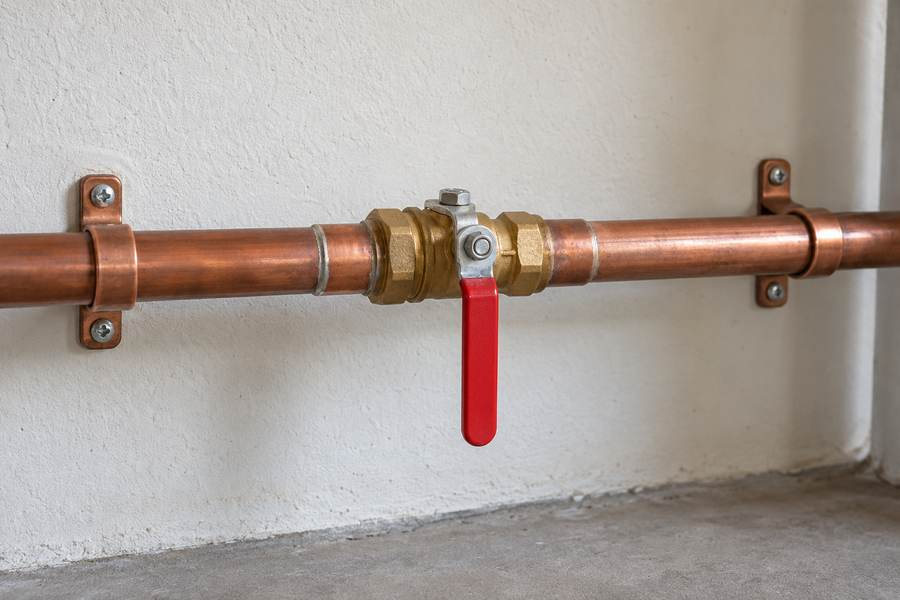
If the meter confirmed movement, locate the main shutoff valve for your home. In many Oklahoma City houses it sits in a garage, a utility room, near the water heater, or on an exterior wall where the line enters the house.
Close the main valve, then check the meter again.
- The meter keeps moving with the main valve closed. The water is escaping between the meter and your home, which points to the yard service line.
- The meter stops with the main valve closed. The water is escaping after the valve, which points to the plumbing inside the house, including lines inside walls and under the slab.
This single test cuts your search area roughly in half, and it explains why plumbers begin with it every time.
Where Is the Water Going? A Quick Comparison
| Location | Typical clues | Meter behavior |
|---|---|---|
| Inside the house | Damp drywall, stained ceilings, dripping fixtures, a running toilet | Stops when the main valve closes |
| Under the slab | Warm floor spots, running water sounds, musty rooms, softer pressure | Stops when the main valve closes |
| In the yard | Soggy lawn, an unusually green strip of grass, pooling near the meter box | Keeps moving with the main valve closed |
Checking for a Leak Inside the House
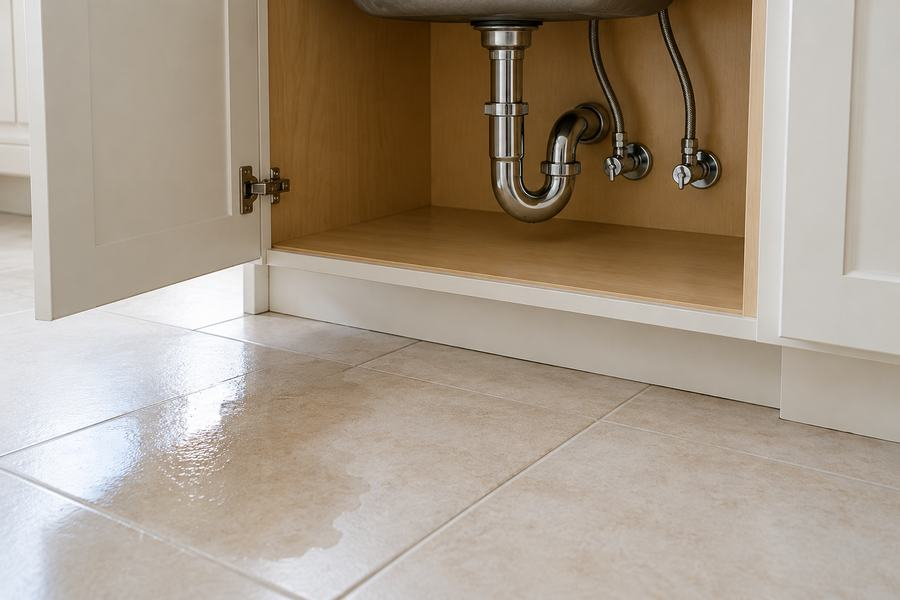
Interior sources are the most common, and they are also the easiest to rule in or out.
- Toilets: Add a few drops of food coloring to the tank, wait about thirty minutes without flushing, and look for color in the bowl. Color in the bowl points to a worn flapper.
- Faucets and shower valves: Look for slow drips, damp cabinet floors, and moisture around escutcheon plates.
- Water heater: Check the base of the tank, the temperature and pressure relief valve discharge pipe, and the supply connections. Mineral buildup and rust stains around fittings are useful hints. If you see them, our water heater repair service page explains what a technician inspects.
- Appliance lines: Inspect the washing machine hoses, the dishwasher supply, the refrigerator ice maker line, and the shutoff valves under every sink.
- Walls and ceilings: Watch for bubbling paint, discoloration, soft drywall, or baseboards that have lifted slightly.
To narrow the field further, close the individual shutoff valves under sinks and behind toilets one at a time while watching the meter. When the indicator stops after you close a particular valve, you have found the branch.
Clues That Point to a Leak Under the Slab
Oklahoma City has many slab on grade homes, so supply lines in the floor or beneath it are part of the local picture. When the meter stops after the main valve closes but you have not found a visible source, the slab becomes a strong candidate.
Watch for these patterns:
- A warm spot on tile, vinyl, or hardwood, which often relates to a hot water line
- The sound of running or hissing water in a quiet house
- Moisture on the floor with no fixture above it
- A musty odor in one room that stays the same regardless of weather
- Water pressure that feels softer at several fixtures
- Hot water that takes a long time to arrive, or a water heater that seems to run constantly
A helpful step is the hot side and cold side check. Close the valve that feeds your water heater and watch the meter. If the indicator stops, the opening is on the hot water side. If it continues, the cold side is the likely source.
Our companion guide on telling a slab leak from foundation moisture in Oklahoma City covers the plastic sheet test and the weather journal method for separating plumbing leaks from soil moisture.
Clues That Point to a Leak in the Yard
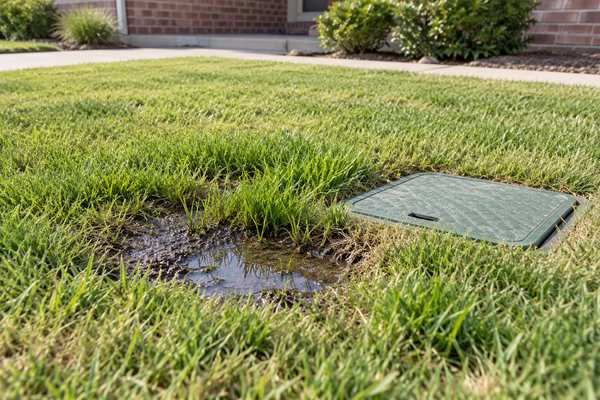
When the meter keeps moving after the main valve closes, the answer often sits outdoors, along the line that travels from the meter to the house. Walk that straight path and look for:
- A soggy or spongy area that stays wet during dry weeks.
- A strip of grass that looks greener or grows faster than the rest of the lawn.
- Pooling water near the meter box or along the foundation.
- Mud or soft soil that appears with no rain.
- A small dip or settling in the lawn or along a walkway.
- Lower water pressure at every fixture, including outdoor spigots.
The sprinkler system deserves its own check. Close the irrigation valve and run the meter test again. If the indicator stops, the leak is in the irrigation lines or heads. If it continues, the main service line remains the leading candidate. A sprinkler zone test, where each zone runs separately while you watch the meter, narrows the section further.
Water Line or Sewer Line? A Quick Way to Tell
A wet patch in the yard can come from a clean water line or from a sewer line, and the two behave differently. Fresh water has no odor and the meter will move. A sewer source often carries a noticeable smell and the meter stays quiet. A few drops of food coloring in a toilet, followed by a flush, can show whether color reaches the damp area after about thirty minutes. If you suspect the sewer side, our sewer line repair page explains how camera inspections locate the opening.
Why Oklahoma City Homes Have Their Own Leak Patterns
Local conditions shape where hidden water tends to appear:
- Expansive clay soil swells after rain and contracts in dry stretches, which places gentle stress on buried service lines and on joints near the foundation.
- Freeze thaw cycles in January and February can affect exposed lines, outdoor spigots, and shallow yard piping.
- Older neighborhoods with galvanized steel or aging copper often develop pinholes at connections.
- Tree roots search for moisture and can press against lines in established Nichols Hills, Edmond, and Norman yards.
- Irrigation systems add many connections, and each one is a potential spot for seepage.
These patterns explain why a leak detection visit in the OKC metro often involves both indoor and outdoor checks.
What Professional Leak Detection Adds
Home tests identify the zone. Professional tools identify the exact spot. Common methods include:
- Acoustic listening to hear the sound signature of escaping water
- Thermal imaging to reveal heat trails from hot water lines
- Pressure testing to isolate individual branches
- Electronic line tracing to map buried pipe routes
- Tracer gas to confirm locations in tricky areas
- Moisture meters to compare readings across floors and walls
Accurate location means a small, targeted opening in a floor or yard instead of broad exploration. You can read more about the process on our leak detection page.
Safe Steps While You Investigate
- Know where your main shutoff valve is and test that it turns smoothly.
- Call 811 before any digging in the yard, so buried utilities stay protected.
- Keep electronics, furniture, and cords away from wet floors.
- Photograph moisture spots and write down meter readings with the time.
- Close the main valve if water is actively flowing and you cannot locate the source.
A Simple Notes Sheet to Gather Before a Plumber Arrives
Information saves time on any service visit. Record:
- Meter readings before and after the test
- Whether the meter stopped when the main valve closed
- Whether the hot side valve changed the reading
- Rooms with warm spots, odors, or moisture
- Yard areas that stay soft or green
- Recent changes in your water bill
Frequently Asked Questions
How do I know if a water leak is inside the house or outside?
Close the main shutoff valve and watch the water meter. If the meter keeps moving, the leak is outside between the meter and the house. If it stops, the leak is inside the house or under the slab.
What does a leak under a slab sound like?
Many homeowners hear faint running water, a soft hiss, or a quiet trickle in a silent house, most noticeable at night near the area above the pipe.
Can a yard leak raise my water bill?
Yes. The line between the meter and your home is on your side of the meter, so water escaping there is measured and billed.
How long should I wait during the meter test?
Fifteen to thirty minutes shows most active leaks, and a longer wait of up to two hours helps reveal very small ones.
Do all hidden leaks leave visible wet spots?
Not always. Water can travel through soil, gravel, and framing before it appears, so the wet area may sit some distance from the opening.
What is the best first step when I notice a spike in my water bill?
Run the meter test with every fixture off, then use the main shutoff check to sort the result into inside, under the slab, or yard.
Key Takeaway
The meter reveals whether water is moving, and the main shutoff valve reveals which side of your home the water is on. From there, room by room checks, the hot side test, and a walk along the service line complete the picture. With a few notes in hand, locating the exact spot becomes a quick, focused step.