Hydro jetting works better for grease, sludge, scale, and root buildup along the pipe walls, while drain snaking works better for a single obstruction such as hair, paper, or a small object.
In the hydro jetting vs snaking comparison, the right choice depends on what is inside the pipe and what condition the pipe is in.
We provide both snaking and hydro jetting as part of our drain cleaning service across Oklahoma City, and as an experienced plumber in OKC, we match the method to the clog instead of using one tool for everything.
This guide explains how each method works, which clogs suit each one, and how to tell which approach fits your drain.
How Drain Snaking Works
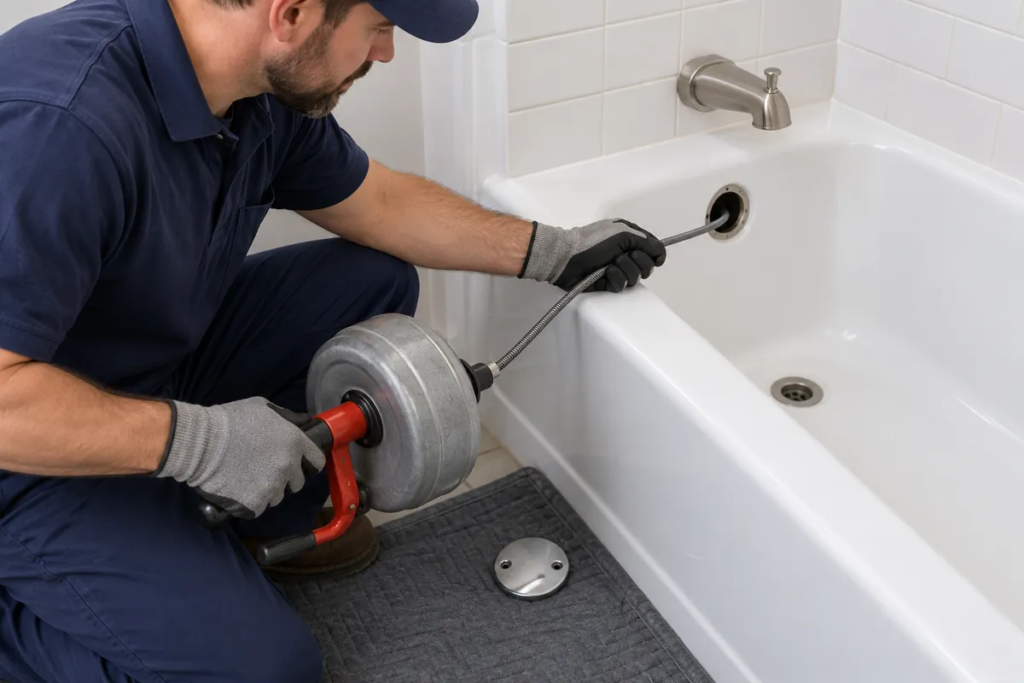
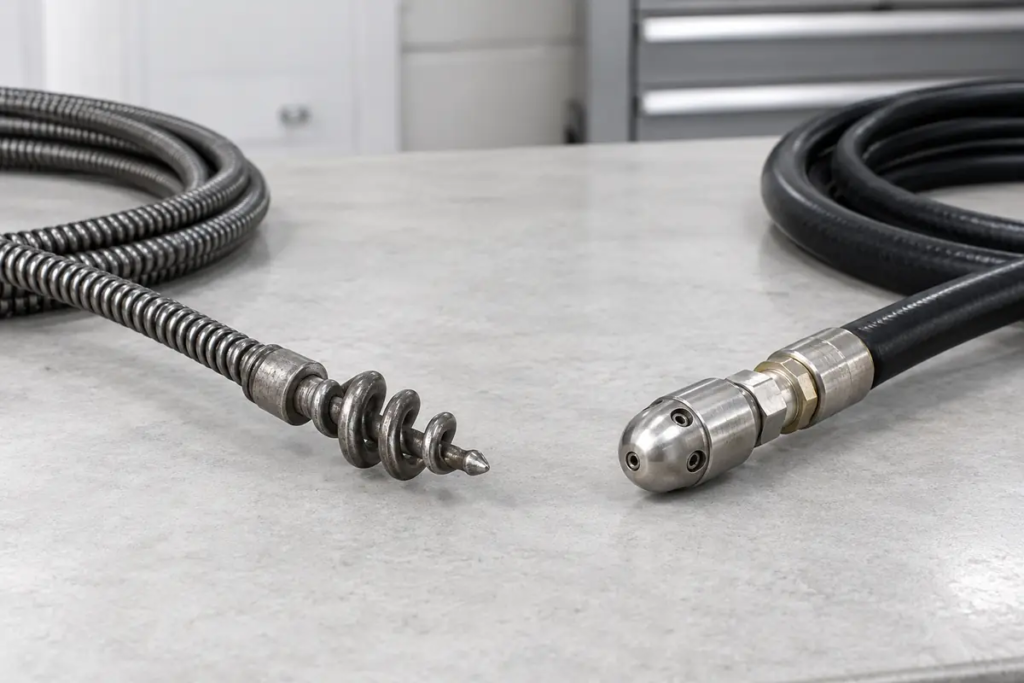
A drain snake, also called an auger, is a flexible steel cable that rotates as it moves through a pipe. The tip carries a hook, blade, or cutting head. When it reaches a blockage, it breaks the material apart, hooks it, or bores a channel through it so water can flow again.
Snaking has been a trusted method for decades because it is quick, direct, and gentle on pipes. Technicians use smaller cables for sinks and tubs, and larger machines with heavier cables for main sewer lines.
What Snaking Does Well
- Opens a drain quickly, often in a single visit
- Retrieves solid objects such as toys, jewelry, or a clump of hair
- Cuts through paper and soft debris in a toilet or branch line
- Works with a wide range of pipe materials and conditions
- Fits tight bends in kitchen and bathroom plumbing
What Snaking Leaves in Place
A snake works along the center of the pipe. It clears a path roughly the width of its head, and any coating on the pipe walls remains. In a 4 inch sewer line, that coating can hold a surprising amount of material. For a deeper look at how this plays out, our article on why a main drain keeps clogging after snaking covers the common causes.
How Hydro Jetting Works
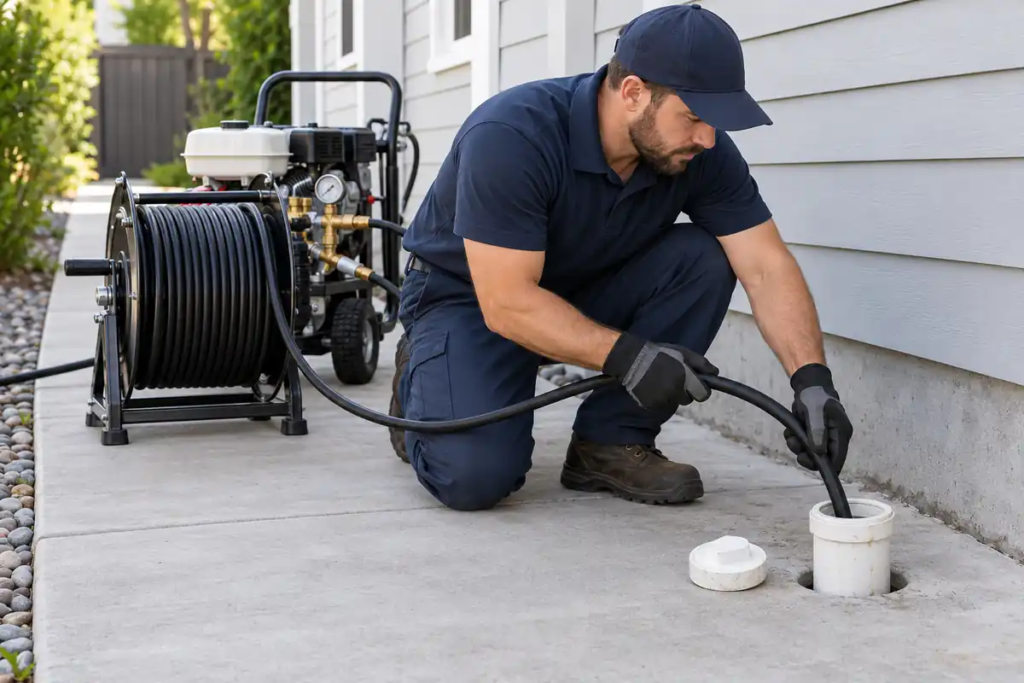
Hydro jetting uses a flexible hose with a specialized nozzle connected to a high pressure water unit. The nozzle sends water in several directions at once. Forward jets push the hose along the pipe, and rear facing jets pull it forward while scouring the walls. Residential jetting commonly operates from about 1,500 to 4,000 PSI, and the technician selects the pressure and nozzle style based on the pipe size, material, and the type of buildup.
The moving water cuts through grease, flushes sediment, removes scale, and trims fine roots. The result is a pipe interior that looks much closer to its original condition.
What Hydro Jetting Does Well
- Cleans the full circumference of the pipe, not just the center.
- Removes grease layers that form in kitchen and main lines.
- Flushes sludge and sediment toward the sewer main.
- Clears fine root growth from the inside surfaces.
- Descales cast iron pipes with rough interior surfaces.
- Resets the line so new buildup takes longer to form.
Where Hydro Jetting Needs Preparation?
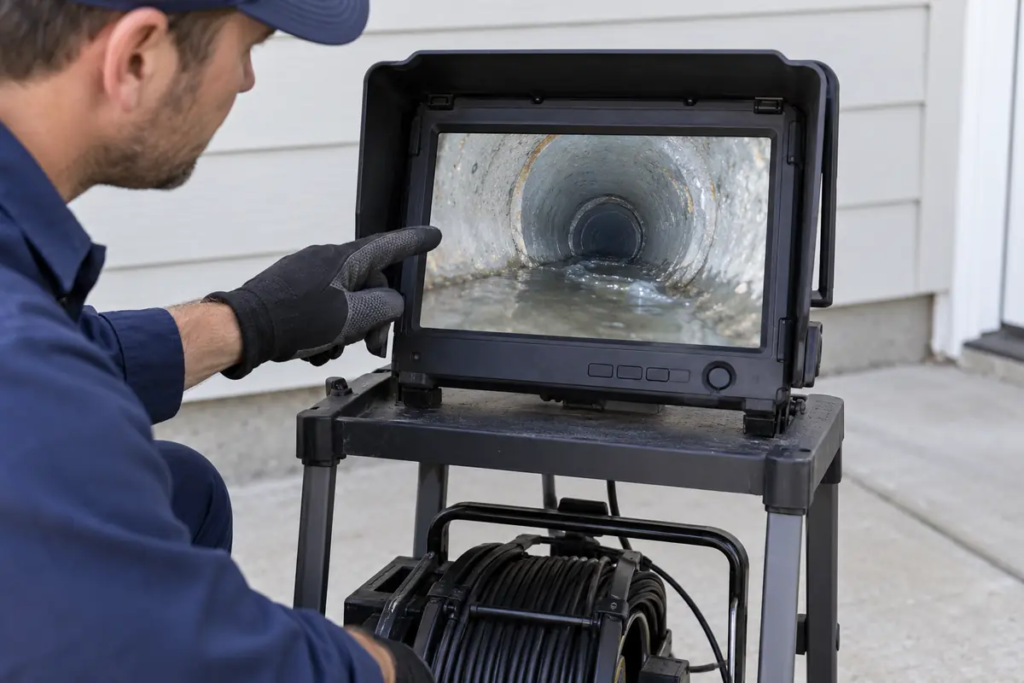
Jetting delivers its best results when the technician knows the pipe condition first. A sewer camera inspection shows the pipe material, any cracks or offsets, and the location of buildup.
With that information, the technician can choose a pressure level that suits the line.
Access matters too, since jetting typically starts from a sewer cleanout. If you are unsure where yours is, this guide on locating your sewer cleanout will help.
Hydro Jetting vs Snaking by Clog Type
| Type of clog | Snaking | Hydro jetting | Why |
|---|---|---|---|
| Hair and soap in a tub or sink | Excellent fit | Rarely needed | A snake hooks or cuts the mass directly |
| A single clump of toilet paper | Excellent fit | Optional | The obstruction is localized |
| A solid object in the line | Excellent fit | Less suitable | A snake can hook and retrieve it |
| Grease buildup in a kitchen or main line | Good for opening flow | Excellent fit | Water scours the entire wall |
| Sludge and sediment | Partial results | Excellent fit | Water flushes material downstream |
| Fine tree roots | Good with a cutter head | Excellent fit | Jetting cleans the whole interior after cutting |
| Heavy tree roots | Cutter head first | Follow up cleaning | Many lines benefit from both steps |
| Scale in cast iron pipe | Limited | Excellent fit | Water descales the rough surface |
| Recurring slow drains | Short term relief | Strong fit | Jetting removes the buildup that keeps returning |
| A sagging or offset pipe | Opens flow briefly | Cleans the section | The pipe shape needs a repair to resolve it fully |
Matching the Method to Your Situation
A Slow Sink or Tub
Most single fixture slowdowns come from hair, soap, and food particles near the trap or branch line. Snaking is the natural fit. It reaches the obstruction directly and typically restores flow in one visit.
A Toilet That Backs Up Repeatedly
If one toilet is slow, a closet auger or short cable usually finds the cause. If several fixtures react together, the main line deserves attention, and a larger cable or hydro jetting gets better results.
A Main Sewer Line With Recurring Slowdowns
When the main line has slowed more than once, buildup along the walls is usually involved. Snaking opens the channel, and hydro jetting restores the full pipe diameter. Many technicians use both in sequence: snake first to open a path for the jetting hose, then jet to finish the cleaning.
Kitchen Lines and Restaurant Drains
Cooking oils cool inside pipes and form dense layers. Homes with busy kitchens benefit from periodic jetting, and food service properties often schedule it as routine maintenance. Our commercial plumber service supports restaurants and other businesses that rely on steady drainage.
Older Homes
Many Oklahoma City neighborhoods include homes with clay tile, cast iron, or Orangeburg sewer lines. Each material responds differently. Cast iron often carries rough scale that jetting removes well.
Clay tile lines with open joints and fiber pipe with softened walls call for a camera inspection first, so the technician can choose a suitable pressure or a gentler approach.
Because a camera also shows the line’s overall condition, it is a valuable step before buying an older home, as our guide on plumbing checks for OKC homebuyers explains.
What Local Conditions Mean for Drain Cleaning in Oklahoma City
Oklahoma City sits on clay rich soil that expands and contracts with moisture. Over time, that movement can shift pipe sections and open joints. Mature trees across Edmond, Norman, Moore, and Midwest City send roots toward the moisture inside sewer lines. These local factors help explain why many OKC lines benefit from a full interior cleaning and an occasional camera check, rather than snaking alone.
When Neither Method Is the Final Answer
Snaking and hydro jetting are cleaning tools. They restore flow and remove buildup, and they work best when the pipe itself is sound. A pipe with a sagging section, a separated joint, or a collapsed segment needs a repair to hold its shape. After cleaning, a camera inspection shows whether a spot repair or a longer renewal fits the line, and our sewer line repair page outlines the options available.
A Simple Way to Decide
- Is it one fixture or several? One fixture points to snaking. Several fixtures point to the main line and the full pipe interior.
- Has it happened before? A first time slowdown often suits snaking. Repeated slowdowns suggest buildup that jetting removes.
- What goes down the drain? Heavy cooking oils, wipes, and mineral rich water favor jetting.
- How old is the pipe? Older pipes benefit from a camera inspection before choosing the cleaning method.
- Is there a known cause? A dropped object suits snaking. Roots, grease, and scale suit jetting.
Related: Why Does My Main Drain Keep Clogging Even After It Has Been Snaked?
Frequently Asked Questions
Is hydro jetting better than snaking?
Hydro jetting cleans more of the pipe, which makes it the stronger choice for grease, sludge, scale, and recurring slowdowns. Snaking is the better choice for a single localized obstruction. Each method has its own strengths.
Which is better for a main sewer line clog?
Main lines usually collect buildup along the full pipe wall, so hydro jetting delivers the most complete results. Many technicians snake first to open a path, then jet to finish the cleaning.
Can hydro jetting remove tree roots?
Hydro jetting clears fine roots and cleans the pipe after a cutter head removes heavier growth. Roots can regrow when the entry point stays open, so a camera inspection helps decide on follow up care.
Is hydro jetting safe for older pipes?
Pipe condition guides the decision. A camera inspection shows the material and condition, and the technician selects a pressure and nozzle that suit the line. Some older lines are better candidates for snaking or repair first.
How often should a home have hydro jetting?
It depends on the line. Many homes with no history of slowdowns need cleaning only when symptoms appear. Homes with mature trees, older pipes, or busy kitchens often benefit from a maintenance schedule based on what the camera shows.
Can I snake a main drain myself?
Hardware stores rent cables for sinks and some main lines. Larger sewer lines benefit from professional equipment, a camera, and the experience to read what the cable meets along the way.
Do snaking and hydro jetting work together?
Yes. Snaking opens a path and jetting cleans the walls, so the two methods complement each other in many main line cleanings.
Choosing With Confidence
Snaking and hydro jetting each solve a different part of the same challenge. Snaking opens a path, and hydro jetting restores the pipe.
Matching the method to the clog type, the pipe material, and the history of your drain gives you results that last. If your drain needs attention, our drain cleaning page shows how our team approaches each situation across Oklahoma City.