A main drain keeps clogging after snaking because the snake opens a narrow pathway through the blockage, while the buildup on the pipe walls and the underlying condition that created it, such as tree roots, a sagging pipe section, or aging pipe material, stay in place.
We provide drain cleaning and main sewer line service across Oklahoma City, and when a drain keeps clogging after snaking, the lasting answer comes from finding that underlying cause instead of repeating the same cleaning.
As an experienced plumber in OKC, we see this pattern often. The first snaking restores flow, everything drains well for a few days or weeks, and then the slow drains and gurgling return.
This guide explains why that happens, how to recognize the cause, and which methods keep a main line flowing for years.
What a Drain Snake Actually Does
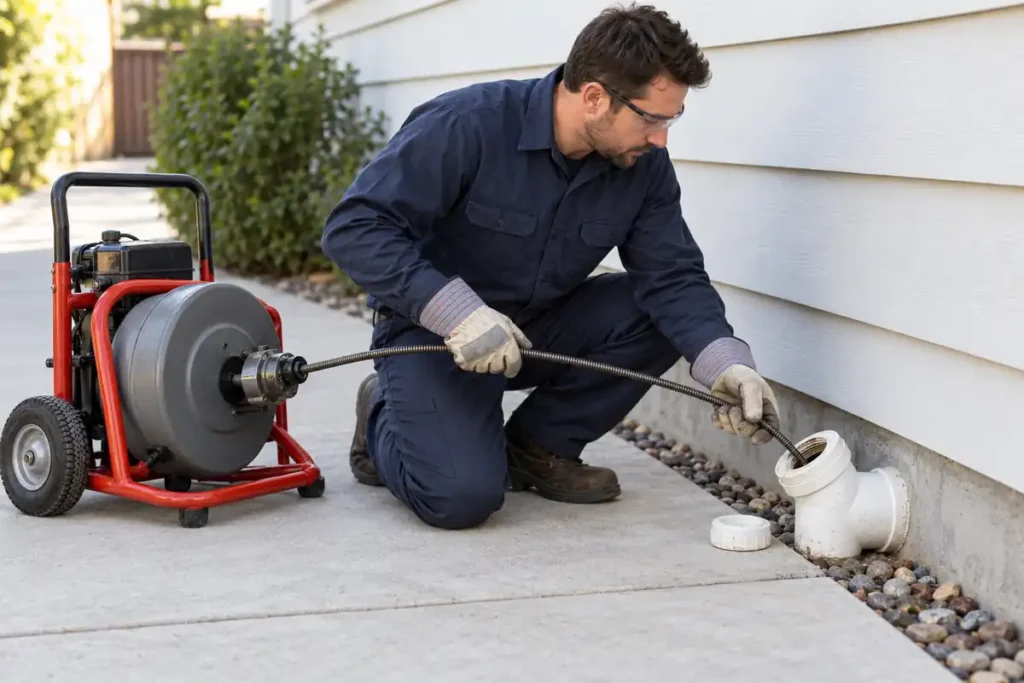
A drain snake, also called a drain auger or sewer snake, is a rotating steel cable with a cutting or boring head. It pushes through a blockage and breaks it apart so water can move again. For a fresh blockage made of hair, paper, or a small clump of debris, that is exactly the right tool.
A snake works in a straight line, and it clears a channel roughly the width of its cutting head. A main sewer line is typically 3 to 4 inches wide. A snake head of 3/4 inch can open a channel through the center of a pipe while a ring of grease, scale, and sediment remains along the walls.
Water flows again, and the remaining buildup begins collecting new material right away. That is why many homeowners describe the line as “fixed for a week.”
Common Reasons a Main Drain Keeps Clogging After Snaking
Tree Roots Growing Into the Sewer Line
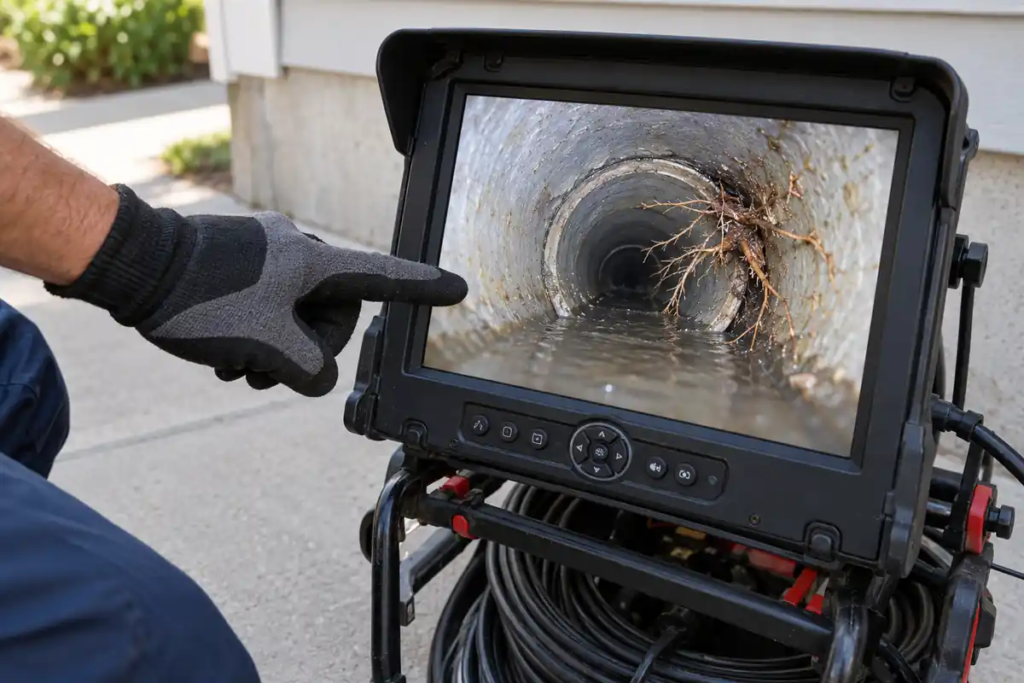
Roots follow moisture, and a sewer line carries a steady supply of water and nutrients. Hair thin roots slip into small joints and hairline openings, then thicken over time.
A snake cuts the portion inside the pipe, yet the root system outside the pipe keeps growing. Fine root growth often returns within months, which creates a repeating cycle of clearing and regrowth.
Signs of roots include slow drains in several fixtures, gurgling toilets, and blockages that return on a predictable schedule. A sewer camera inspection confirms the diagnosis by showing the roots directly.
A Sagging Section of Pipe, Also Called a Belly
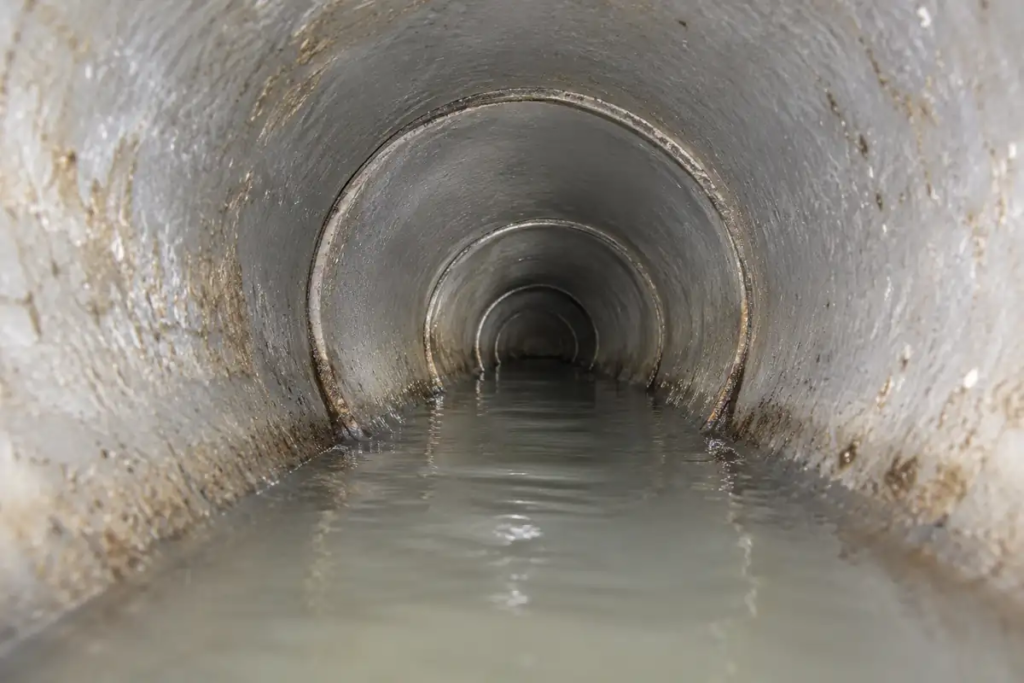
Sewer pipes rely on a steady downward slope so gravity carries waste along. When soil settles beneath a section, the pipe dips and forms a shallow basin that holds water and solids.
A snake passes straight through this section, and the line drains for a while, but solids keep settling in the same low spot until the flow slows again.
This is one reason a snake can travel the full length of a line while water still drains slowly afterward. The cable fits through the pipe, and the pipe shape itself continues to collect material.
Grease, Wipes, and Layered Buildup
Cooking grease cools inside pipes and forms a coating that attracts soap residue, food particles, and paper. Flushable wipes, which do not break down like toilet paper, join that coating and form dense layers.
Snaking opens a path, and the surrounding layers keep narrowing the pipe. Hydro jetting, which uses high pressure water, scours the full circumference of the pipe wall and restores the original inside diameter.
Pipe Material and Age
Many Oklahoma City neighborhoods include homes built before 1980, and older sewer lines are often made from clay tile, cast iron, or Orangeburg, a fiber pipe used in the mid 1900s. Each material has its own tendencies:
- Clay tile: Made in short sections with many joints, which gives roots more entry points.
- Cast iron: Develops rough scale on the inside surface, which catches debris and slows flow.
- Orangeburg: Softens and changes shape over the decades, which can create ridges and low spots.
A rough or uneven interior surface collects waste faster than smooth modern PVC, so a freshly snaked line can refill with buildup quickly.
Offset or Separated Joints
Ground movement can shift two pipe sections out of alignment. The edge at the offset joint catches paper and solids, and a snake may glide past the joint without changing its shape.
The blockage returns because the joint continues to catch debris. A camera inspection locates the exact distance to the joint, which allows a targeted spot repair.
A Blockage Farther Downstream
Sometimes the snake clears the area near the cleanout while a second restriction sits farther along the line, near the property line or in the lateral that connects to the city main. The first few feet flow well, yet the full line remains partly restricted. Camera inspection traces the entire route and finds every restriction in one visit.
Why Oklahoma City Homes Experience Recurring Main Line Blockages
Local conditions shape how sewer lines behave across the OKC metro:
- Red clay soil: Oklahoma City sits on clay rich soil that expands when wet and contracts when dry. This steady movement can shift pipe sections and open joints over the years.
- Mature trees: Established neighborhoods in Edmond, Moore, Norman, and Midwest City feature large shade trees with extensive root systems.
- Freeze and thaw cycles: Winter temperature swings move shallow soil and add seasonal stress to underground lines.
- Older housing stock: Historic districts and homes built before 1980 often have original clay or cast iron sewer lines. Our guide on plumbing in historic OKC neighborhoods explains how these older systems age.
Signs the Blockage Sits in the Main Line
A single slow sink points to a local branch line. These patterns point to the main line:
- Several fixtures drain slowly at the same time.
- Toilets gurgle when the washing machine drains.
- The lowest drain in the house, often a shower or floor drain, shows water first.
- Water rises in a bathtub when a toilet is flushed.
- A sewer odor appears near drains or in the yard.
- The cleanout cap shows standing water. If you want to find yours, read our guide on where your sewer cleanout is located.
Heavy rain can also increase pressure on a partly restricted line, which is covered in our article on sewer backup after heavy rain in Oklahoma City.
Snaking, Hydro Jetting, and Camera Inspection Compared
| Method | What it does | Best suited for |
|---|---|---|
| Drain snaking | Cuts a channel through the blockage | A first time blockage, hair, paper, small debris |
| Hydro jetting | Scours the full pipe wall with high pressure water | Grease, scale, sediment, and fine roots |
| Sewer camera inspection | Shows the inside of the pipe on video | Recurring blockages, unknown causes, home purchases |
| Root cutting | Uses a cutter head to clear root masses | Active root intrusion |
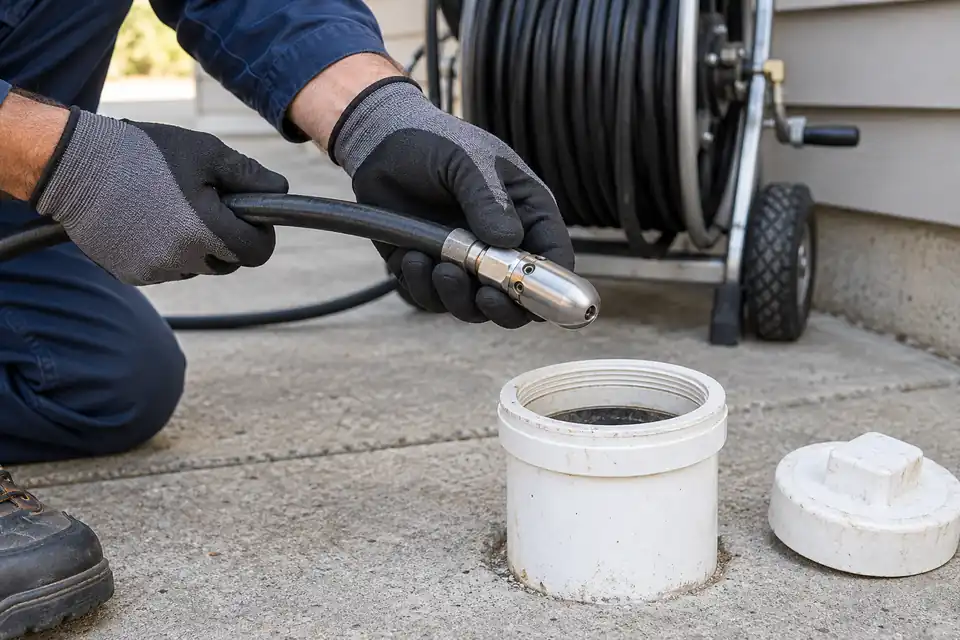
Each method has a role. Snaking is an excellent first step, hydro jetting restores the pipe interior, and a camera shows which approach the line needs. You can see how these services fit together on our drain cleaning page.
What a Lasting Solution Looks Like?
A recurring main line blockage usually calls for a short sequence:
- Inspect first. A sewer camera travels through the line and records roots, sags, offsets, scale, and the pipe material.
- Clean the full pipe. Hydro jetting or root cutting restores a clear interior.
- Match the repair to the finding. A healthy line needs only scheduled maintenance. A single offset joint or root entry point can receive a spot repair. A longer section of aging pipe may suit trenchless relining or pipe bursting, and our article on trenchless sewer line repair costs in Oklahoma City explains those options in detail.
- Set a maintenance rhythm. Lines with root activity benefit from periodic cleaning on a schedule based on what the camera revealed.
Habits That Keep a Main Drain Flowing
- Pour cooking grease into a container and place it in the trash.
- Flush only toilet paper and human waste. Wipes belong in the trash, even when the package says flushable.
- Use drain screens in showers and tubs to catch hair.
- Run hot water for a minute after using the kitchen sink.
- Keep new trees and large shrubs well away from the sewer line path.
- Locate your cleanout and keep the area accessible.
- Schedule a camera inspection if your home was built before 1980 and the line has never been viewed. Our guide on plumbing checks for homebuyers in the OKC metro explains why this step is so valuable.
Who Maintains the Line?
In Oklahoma City, the homeowner typically maintains the private sewer line from the house to the property line, while the city maintains the public main beneath the street. Knowing this boundary helps you decide where to look first when a drain keeps clogging.
Our article on responsibility for sewer backups in Oklahoma City walks through the details, and renters can review landlord and tenant plumbing responsibilities under Oklahoma law.
Related: Why Does My Sewer Back Up After Heavy Rain in Oklahoma City?
Frequently Asked Questions
Why does my drain keep clogging after it has been snaked?
Snaking opens a channel through the blockage but leaves the buildup on the pipe walls and the condition that created it, such as roots, a sag, or aging pipe. The channel refills as new material collects, so flow slows again.
How long should a snaked main drain stay clear?
It depends on the cause. A blockage from a single event, such as a clump of paper, can stay clear for years. A line with roots, grease layers, or a belly may slow again within weeks or months.
Is hydro jetting better than snaking for a recurring main line blockage?
Hydro jetting cleans the entire pipe wall, which makes it well suited to grease, scale, and sediment. Snaking suits a single obstruction. Many recurring cases benefit from a camera inspection first, followed by the method that fits what the camera reveals.
Can a snake pass through the line while the drain still runs slowly?
Yes. A snake can travel through a sagging, scaled, or offset pipe, and the shape of the pipe continues to slow the water. A camera inspection shows these conditions clearly.
Do tree roots cause repeated main drain clogs?
Roots are among the most common causes, especially in older clay and cast iron lines near mature trees. They return after cutting unless the entry point is sealed or the pipe is renewed.
What does a sewer camera inspection show?
It shows the pipe material, condition, slope, joints, roots, buildup, and the exact distance to any restriction. That information turns guesswork into a clear repair plan.
Can I use chemical drain cleaners on a main line?
Main lines are larger than household chemical products are designed for, and the liquid often drains past the blockage. A professional cleaning method reaches the whole pipe more reliably.
A Clear Path Forward
When a drain keeps clogging after snaking, the pipe is giving useful information about its condition. With a camera inspection and the right cleaning method, that information becomes a lasting plan.
As an experienced plumber in OKC, we are happy to explain what we see in the line so homeowners can make confident decisions.
For urgent situations, our emergency plumber page has the details, and our residential plumber page covers everyday home service from Edmond to Moore to Norman.