

The fastest way to read your Oklahoma City water meter and check for a hidden leak is to locate the meter box near the street, note the numbers on the dial, turn off every fixture and appliance inside the home, and watch the small leak indicator hand for even the slightest movement over a few minutes.
As an experienced plumber in Oklahoma City, we get asked about this almost as often as we get asked about actual leak repairs, since most homeowners have never actually opened their meter box or looked closely at what the dial is telling them.
This guide walks through exactly how OKC meters work, what each part of the dial means, and how to use it to catch a small leak before it turns into a large water bill.
Where to Find Your Water Meter in Oklahoma City

In Oklahoma City, the water meter sits in a small underground box near the curb or sidewalk, marking the point where your private service line connects to the city’s public water main.
The box usually has a metal or plastic lid, sometimes labeled “water,” and can be lifted by hand or gently pried open with a flathead screwdriver.
This is the same meter the city’s meter reading crews check each month, either by walking up to the analog dial or by driving past with automated equipment, so it is always accessible from the street side of the property rather than tucked away indoors.
Understanding the Type of Meter You Have
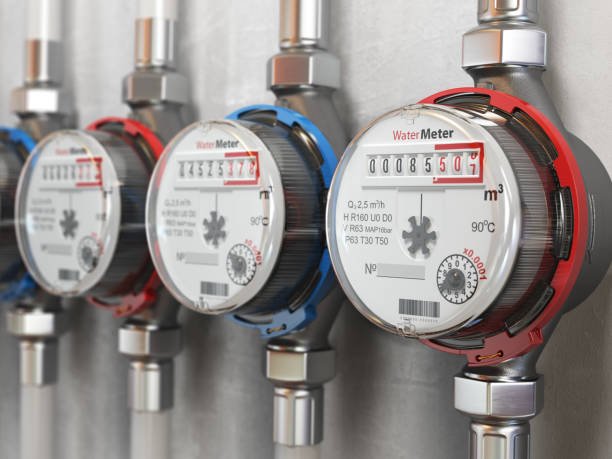
Oklahoma City primarily uses nutating disc meters, a design where a small internal disc rotates as water passes through, and that rotation is what drives the numbers on the dial. Homes across the city are gradually being read in one of two ways.
Analog dials look similar to a car odometer and are read manually by meter staff walking the neighborhood.
AMR meters, short for Automated Meter Reading, transmit usage data wirelessly to a receiver in a passing utility vehicle, though this technology only reports monthly totals rather than live, real time flow.
Knowing which type sits in your yard helps set expectations, since only the analog dial gives you a visual leak indicator you can watch in real time.
How to Read the Numbers for Billing
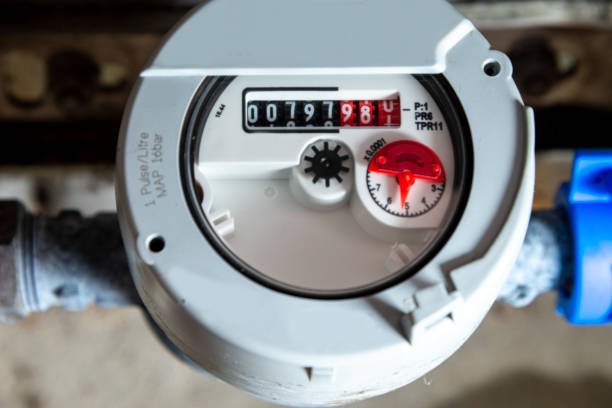
On an analog meter, seven digits are arranged like a small odometer. The digits printed on a white background represent water used in 1,000 gallon increments, and this is the number the city actually bills against each month.
The digits on a black background to the right track individual gallons, in units of 1, 10, and 100, and simply roll over once they hit 999, much like the trip odometer in a car.
Reading these numbers before and after a period of no water use is the basis for the leak check described below.
The Leak Indicator Every Homeowner Should Know
This is the detail that makes Oklahoma City meters especially useful for catching a leak early. Along with the standard consumption hand, most analog meters here include a second, smaller hand shaped like a flower or star.
The long hand tracks overall water consumption and reflects larger volumes moving through the line. If this hand is turning while every fixture and appliance in the house is off, it usually points to a leak significant enough to notice fairly quickly through a rising bill.
The flower shaped hand is far more sensitive and is designed specifically to catch smaller, slower flows, the kind produced by a dripping outdoor spigot, a running toilet flapper, or a pinhole leak in a buried line.
Because it responds to such a low flow rate, this hand is often the very first sign of a hidden leak long before the main dial shows any meaningful change.
Step by Step Leak Check Using Your Meter
Turn everything off. Shut off every faucet, irrigation zone, ice maker, dishwasher, and washing machine inside and outside the home. Even a single running fixture will skew the reading.
Locate the meter box and lift the lid. Wipe away any dirt or debris so the dial is fully visible.
Watch the flower shaped hand first. Give it a few minutes of steady observation. Any movement at all, even a slow creep, points to water passing through the line somewhere on your property.
Check the long hand as a second confirmation. If it is also moving, the flow is larger and likely easier to trace to a specific fixture or section of pipe.
Record the full number and return later. Write down the complete reading, wait one to two hours without using any water, and compare. An increase confirms that water moved through the meter during a period when nothing should have been running.
What a Moving Indicator Usually Means
A leak detected this way can originate in several places, and narrowing it down often starts with a simple process of elimination.
Toilets are the single most common source, particularly a worn flapper valve that lets water silently seep from the tank into the bowl.
Irrigation systems are another frequent cause, since a cracked line or a stuck valve underground can run for days without any visible sign above the surface.
Water heaters occasionally develop small leaks at fittings or the tank itself. Underground service lines between the meter and the house, especially on older properties, can also develop small cracks from ground shifting or age, and these often show up as unexplained wet spots in the yard or a section of grass that stays greener than the rest.
Why This Matters for Oklahoma City Homeowners Specifically
Because the city bills in 1,000 gallon increments and reads most meters only once a month, a small leak can run for weeks before it shows up clearly on a statement.
Catching movement on the flower shaped indicator gives homeowners a much earlier warning than waiting for the next bill to arrive.
It is also worth noting that if a leak is found to be between the meter and the city’s main connection point, that portion is generally the city’s responsibility, while anything from the meter toward the house falls under the homeowner’s own plumbing system, which is where checking the indicator hands becomes especially valuable for deciding what kind of help to call.
Related: Why Did My Oklahoma City Water Bill Suddenly Increase? 9 Plumbing Causes to Check
When to Bring in a Professional
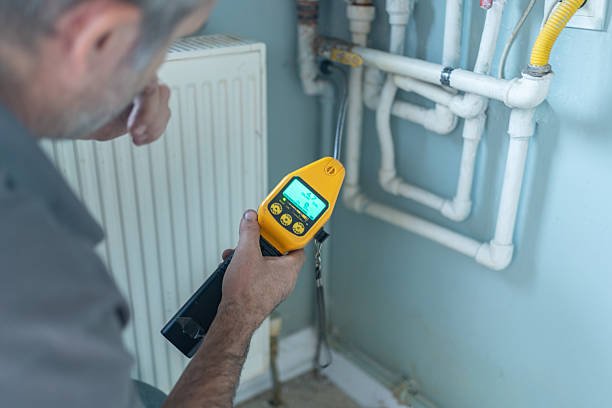
A homeowner can confirm that a leak exists using the steps above, but pinpointing the exact location, especially for a slow leak hidden under a slab, behind a wall, or beneath the yard, usually calls for specialized equipment such as acoustic listening devices or moisture detection tools.
As an experienced plumber in Oklahoma City, our approach starts exactly where this guide does, confirming meter movement first, then narrowing the search systematically so repairs target the actual source rather than guesswork.
Related: Lead Safe OKC: How to Check Your Water Service Line Material
Frequently Asked Questions
What does the flower shaped hand on an Oklahoma City water meter mean?
It is a low flow leak indicator built into most analog meters in the city, designed to move even when water is passing through the line at a very slow rate, making it useful for catching small leaks that the main consumption hand might miss.
How long should I watch the meter to check for a leak?
A few minutes is often enough to catch the sensitive flower shaped hand moving, though letting one to two hours pass between two full readings gives a more reliable confirmation for smaller or intermittent leaks.
Does Oklahoma City use digital or analog water meters?
Both. Many properties still have a traditional analog dial, while the city has been gradually installing AMR technology that transmits monthly readings wirelessly, though even AMR equipped meters are typically paired with the same analog dial face for visual inspection.
Who is responsible for a leak found between the meter and the street?
That section generally falls under the city’s water distribution system, while any leak between the meter and the house is typically the homeowner’s responsibility to address.
Can a running toilet alone move the leak indicator?
Yes. A worn flapper valve is one of the most common causes of a moving flower shaped hand, since it allows a slow, continuous trickle of water from the tank that a homeowner may never actually hear.
Final Thoughts
Reading your Oklahoma City water meter takes only a few minutes once you know where to look and what each hand represents.
The flower shaped leak indicator in particular gives homeowners an early warning system that most people never realize is sitting right in their front yard.
Checking it periodically, especially after a water bill that looks even slightly higher than usual, is one of the simplest habits a homeowner can build to catch a small leak before it grows into a larger repair.