
Tree roots get into a sewer line by following moisture vapor that escapes through tiny gaps at pipe joints, then growing through those openings and thickening inside the pipe where water, nutrients, and air are plentiful.
We provide sewer camera inspection and drain service for homeowners across Oklahoma City, and tree roots in a sewer line in Oklahoma City are among the most common findings we see in established neighborhoods with large shade trees.
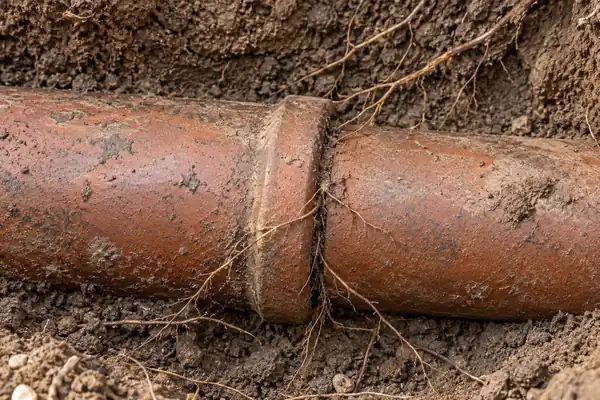
As an experienced plumber in OKC, we have watched this process unfold on camera many times, and understanding how it works is the best way to spot it early and keep a line flowing for years.
This guide explains the biology behind root growth, the exact places roots enter, the symptoms that appear inside your home, what a camera shows, and the prevention steps that make a measurable difference.
The Biology Behind Root Growth Toward Pipes
Roots are built to find water. The thin, hair like feeder roots near the tips do most of the absorbing, and they grow in whichever direction the soil offers moisture, oxygen, and dissolved nutrients. Scientists call this response to moisture hydrotropism.
A sewer line carries warm wastewater rich in the same nutrients a tree uses. Even a very small opening at a joint releases water vapor into the surrounding soil, and that vapor creates a moisture trail. Feeder roots follow the trail the way a plant follows a window.
A few facts about root behavior explain why mature neighborhoods see so much of this:
- Roots spread wide. Most of a tree’s absorbing roots sit in the upper layer of soil and extend well past the canopy edge, often to a distance greater than the height of the tree.
- Roots grow opportunistically. They expand most where conditions are favorable and slow down where the soil is dry or compacted.
- Roots thicken with age. A thread of root that enters a pipe joint becomes thicker each season, which widens the opening it came through.
- Roots need oxygen too. The air space inside a sewer pipe, along with moisture and nutrients, makes the interior an attractive growing environment.
In short, a sewer line offers a steady supply of what a tree is looking for, and the tree does what it is built to do.
How Roots Enter: The Most Common Entry Points
Pipes are sealed systems at installation, and over decades a few areas become the places where roots find their way in.
Pipe Joints
Joints are the primary entry point because every joint is a place where two pieces meet. Different pipe materials have different joint styles:
- Clay tile: Installed in short sections joined with bell and spigot connections. The sealing compound at these joints can loosen over the decades, which opens narrow gaps.
- Cast iron: Sections were commonly joined with lead and oakum or similar packing. Corrosion and movement can loosen these connections.
- Orangeburg (fiber pipe): Used in mid 1900s construction with couplings that can soften and shift as the pipe ages.
- Concrete: Joint seals can wear, which gives roots a path.
- PVC: Gasketed joints form a tight seal. Roots typically enter at poorly seated connections, fittings, or places where earlier movement has shifted the line.
Small Cracks and Hairline Gaps
A crack as thin as a hair can release enough vapor to attract feeder roots. Once a root tip enters, it grows along the crack and expands the opening as it thickens.
Connections and Fittings
Roots often favor the places where one line meets another, such as a branch connection, a wye fitting, a cleanout base, or the point where a home’s lateral line joins the public main. These locations include extra joints and transitions, which makes them natural access points.
Offset and Separated Sections
When soil shifts, one pipe section can slide slightly out of alignment with the next. The resulting gap at the joint becomes an easy path for roots.
Why Mature Oklahoma City Neighborhoods See This Often
Several local conditions work together:

- Red clay soil movement. Oklahoma City clay soils swell when wet and shrink when dry. That cycle can pull joints slightly apart over the years, and the openings release moisture that roots detect.
- Older pipe materials. Many established neighborhoods, including areas like Heritage Hills and Mesta Park, were built with clay tile or cast iron sewer lines. Our guide to historic OKC plumbing explains how those older systems age.
- Large, mature shade trees. Cottonwoods, silver maples, and elms are common sights across the metro, and trees of this size have extensive, active root systems.
- Hot, dry summers. During dry stretches, roots search harder for water, and a sewer line becomes a dependable source of moisture.
- Freeze and thaw cycles. Winter ground movement adds to the seasonal shifting that can open joints.
Symptoms Inside Your Home and Yard
Root growth tends to build gradually, so the early signs are easy to mistake for ordinary slow drains. Common indicators include:
- Slow drains in more than one fixture. Showers, tubs, and sinks slow down together.
- Gurgling sounds. Toilets or drains gurgle when water runs elsewhere in the house.
- Blockages that return on a pattern. The line slows again after each cleaning, often at similar intervals.
- Water appearing in the lowest drain first. A shower or floor drain in a lower area shows the first sign of a restriction.
- Sewer odors outdoors. A faint smell near the cleanout or along the yard can point to a leaking joint.
- Lush strips of grass. A greener, faster growing line of lawn along the sewer path can signal moisture escaping from the pipe.
- Soft or saturated spots in the yard. These suggest water leaving the line at a joint or crack.
When two or three of these appear together, a sewer camera inspection is the quickest way to find the cause.
What a Camera Inspection Shows
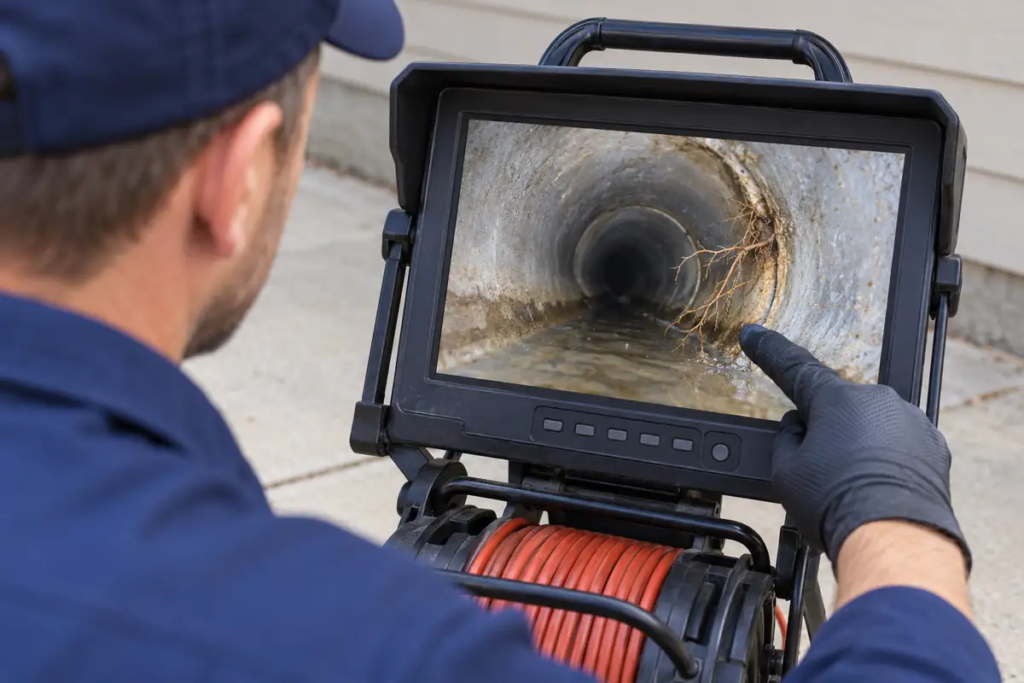
A sewer camera travels through the line on a flexible cable and sends live video to a monitor. The technician can see the pipe material, the joints, the slope, and any growth inside. Here is what different findings usually mean:
| What the camera shows | What it tells us |
|---|---|
| Fine, hair like roots hanging from a joint | An early stage entry point, often called foxtail growth |
| Thick, rope like root masses | Established growth that has been expanding for several seasons |
| Roots at a branch fitting or lateral connection | Access at a junction between two lines |
| Roots along a lengthwise crack | A crack that releases moisture and invites roots |
| Offset or separated joint with roots | Ground movement has opened the joint |
| Standing water with roots | A low spot where roots and debris collect together |
| Rough scale on cast iron with roots | An uneven surface that catches debris around the roots |
| Clean pipe with a single entry point | A localized situation that is simple to monitor |
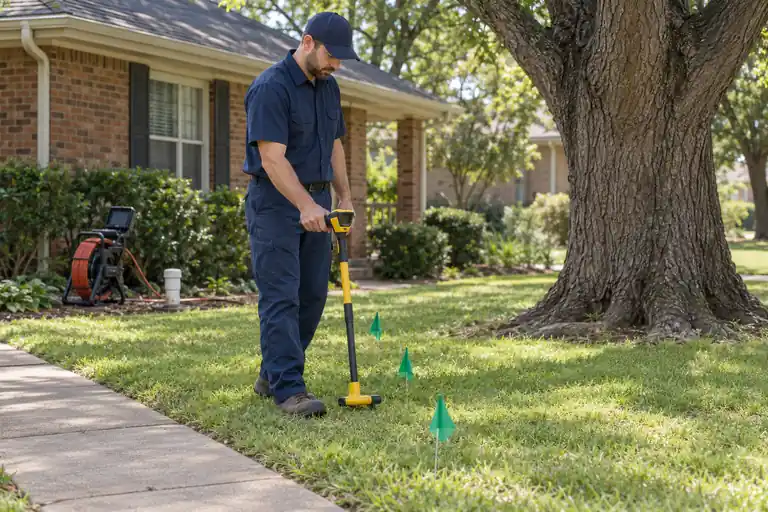
The camera also records the distance to each finding. With a locator, a technician can mark that point at the surface, which shows which tree sits closest to the entry point. After the line has been cleaned, a second pass shows the true condition of the joints that the roots had been covering. Our article on where to find your sewer cleanout explains the access point that makes this inspection possible.
Prevention: Practical Steps That Make a Difference
Map the Line and Know Your Trees
Locating the sewer line on your property is the starting point. A camera and locator trace the path, and you can then compare it with the position of your large trees. Knowing which trees sit near the route helps you plan.
Choose Trees and Placement Thoughtfully
- Keep new large trees well away from the sewer route, with more distance for species that grow large and spread widely.
- Select smaller, slower growing trees for planting beds near the line.
- Place shrubs and ornamental plants over the line instead of large shade trees.
Maintain Even Moisture Around Trees
Trees in drought conditions send roots farther in search of water. Deep watering at the outer edge of the canopy during dry periods encourages roots to spread outward, away from the pipe.
Address Leaks and Loose Joints Early
Because roots follow escaping moisture, sealing a leaking joint removes the signal that draws them in. A camera finding of a small separation or crack is a good reason to plan a targeted fix before roots arrive.
Schedule Camera Checks for Established Properties
Homes with mature trees, older pipe materials, or a history of slowdowns benefit from a periodic camera inspection. Many OKC homeowners schedule one every few years, and homebuyers often add it before closing, as outlined in our guide on plumbing checks for OKC homebuyers.
Plan Routine Cleaning Based on What the Camera Reveals
Lines with active root growth respond well to professional cleaning on a schedule. Our comparison of hydro jetting and snaking explains how each method handles roots.
Know Where Your Responsibility Begins
The private lateral from your home to the property line belongs to the homeowner, while the public main sits beneath the street. This distinction helps you decide where to focus inspections, and it is explained in our guide to sewer backup responsibility in Oklahoma City.
Frequently Asked Questions
How do tree roots get into sewer lines?
Roots follow moisture vapor leaving the pipe through small gaps at joints, cracks, and fittings. They grow through the opening, then thicken inside the pipe as they absorb water and nutrients.
Can tree roots grow through solid pipe?
Roots enter through existing openings such as joints, cracks, and fittings. Solid, intact pipe walls rarely allow entry, which is why joint condition matters so much.
How far can tree roots travel to reach a sewer line?
Roots commonly extend beyond the canopy edge and can travel a distance greater than the height of the tree. Dry periods encourage longer growth toward reliable moisture.
Which pipe materials are most open to root entry?
Clay tile, cast iron, Orangeburg, and concrete have more joints or surface wear that roots can use. Modern PVC has tight gasketed joints, though roots can still enter at fittings and shifted sections.
How fast do roots grow back after cleaning?
Fine roots can return within months when the entry point remains open. A camera inspection after cleaning shows where the roots entered, which helps plan follow up care.
Does cutting a tree back reduce root growth in the pipe?
Trimming the canopy has little effect on the roots below ground. The entry point at the joint and the moisture source are what guide root growth.
How often should a home with mature trees have a camera inspection?
Properties with large trees, older pipes, or recurring slowdowns benefit from a periodic inspection, with timing based on what the first camera pass reveals.
Seeing the Whole Picture
Roots enter sewer lines for the same reason they grow anywhere: they follow water, nutrients, and air. In mature Oklahoma City neighborhoods, older pipe materials, shifting clay soil, and large shade trees bring those elements together. A camera inspection turns that picture into clear information, and a few thoughtful habits keep roots growing where they belong.